Noida SIT Conducts Marathon Questioning of Officials in Engineer's Tragic Death Case
A three-member special investigation team (SIT) probing the tragic death of 27-year-old software engineer Yuvraj Mehta conducted an intensive questioning session on Friday, recording statements from nearly 100 officials involved in the case. The marathon meeting, which lasted from early afternoon until late evening, represents a crucial phase in the investigation into how Mehta drowned after his car plunged into a waterlogged pit in Noida's Sector 150 on January 17.
Comprehensive Examination of Rescue Response
The SIT, formed on Monday with a five-day deadline to submit its report, meticulously questioned officials from multiple agencies including the Noida Authority, State Disaster Response Force (SDRF), police departments, and other emergency response units. Investigators summoned officials individually to the Noida Authority's boardroom, beginning their recording process around 1:30 PM and continuing until approximately 10:00 PM.
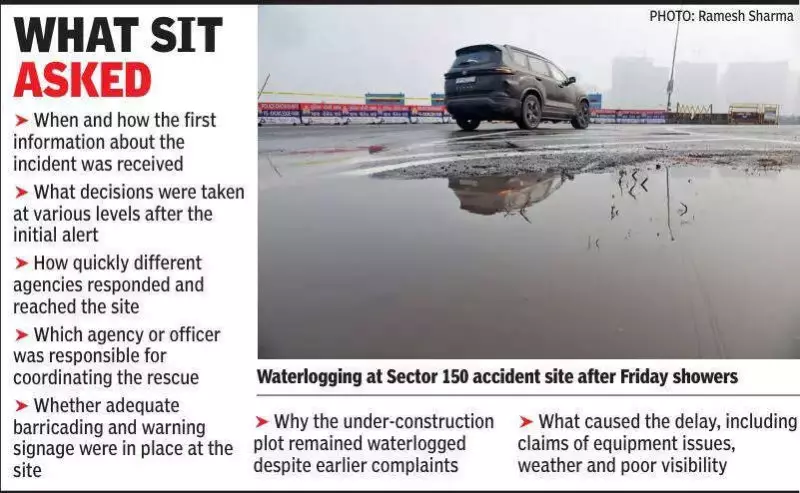
The investigation focused on several critical aspects of the incident:

- The sequence of events following the first alert about the accident
- Decision-making processes at various administrative levels
- Response times of different emergency agencies
- Coordination between SDRF, police, and local administration
- Condition of the accident site and safety measures in place
Scrutinizing Site Conditions and Safety Failures
The inquiry revealed troubling details about the accident location—a nearly 30-foot-deep under-construction plot that had accumulated sewage and rainwater over several years. Despite repeated complaints from residents and the plot's developer in 2022, the hazardous site remained inadequately secured. Investigators specifically questioned why the location lacked proper barricades, reflectors, or warning signage, especially considering that a truck had fallen into the same trench just days before Mehta's fatal accident.
Officials from the Noida Authority were asked to provide detailed responses to a comprehensive questionnaire regarding their actions following the earlier truck incident and their emergency response on the night of Mehta's death. The SIT sought a step-by-step account of when the Authority first received information, what immediate actions followed, how field staff coordinated with control rooms and emergency teams, and which officer was assigned to lead ground operations.
Analyzing Delays and Conflicting Accounts
Recorded statements from various agencies revealed differing explanations for the nearly two-hour delay in initiating rescue operations, despite Mehta shouting for help and flashing his phone torch from the submerged vehicle. Some officials cited equipment constraints, while others pointed to weather conditions and poor visibility—which police sources indicated had dipped to just 50 meters in the early hours of January 17.
The SIT is now analyzing these conflicting accounts to determine how responsibilities were divided among agencies and where critical lapses occurred. Investigators are examining multiple documentation sources to establish a clear timeline, including call detail records, control room logbooks, wireless messages, and movement reports of field units to track when information reached officials and how decisions were communicated.
Investigation Progress and Administrative Impact
With the SIT expected to submit its findings on Saturday unless an extension is requested, the investigation has already caused significant administrative disruption. Ahead of Friday's questioning session, public dealings at the Noida Authority office were suspended, with entry gates closed and visitors turned away—demonstrating the seriousness with which authorities are treating this investigation.
The tragic incident has highlighted systemic failures in urban safety management, particularly regarding construction site security and emergency response coordination in rapidly developing areas like Noida. As the SIT continues analyzing statements and records before submitting its final report to the government, the case serves as a sobering reminder of the human cost when infrastructure safety protocols fail.