Man Arrested in Puri for Creating Fake Social Media Account to Frame Woman
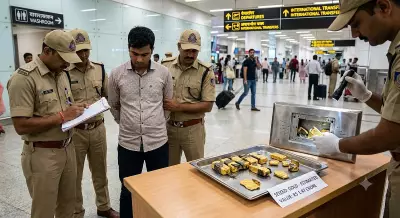
In a disturbing case from Odisha's coastal city of Puri, a 30-year-old man has been arrested for allegedly establishing a fraudulent social media account using the identity of a woman who rejected his romantic advances. The accused, identified as Pratik Mishra, a local resident, was taken into custody by police late on Wednesday evening following an investigation into online threats.
Details of the Fraudulent Activity
According to investigators, Mishra created a deceptive social media profile on January 11 that mirrored the identity of a woman who had recently declined his relationship proposal. Using this fake account, he uploaded a threatening message that vowed to bomb the sacred Jagannath temple and a local retail center. The post also targeted BJD lawmaker Subhasish Khuntia, adding a political dimension to the threats.
During interrogation, Mishra admitted to the offenses and revealed that his primary objective was to implicate the woman in a criminal investigation as retaliation for rejecting him. This calculated attempt to damage her reputation and potentially involve her in legal proceedings has raised serious concerns about digital harassment and misuse of social media platforms.

Security Measures and Political Threats
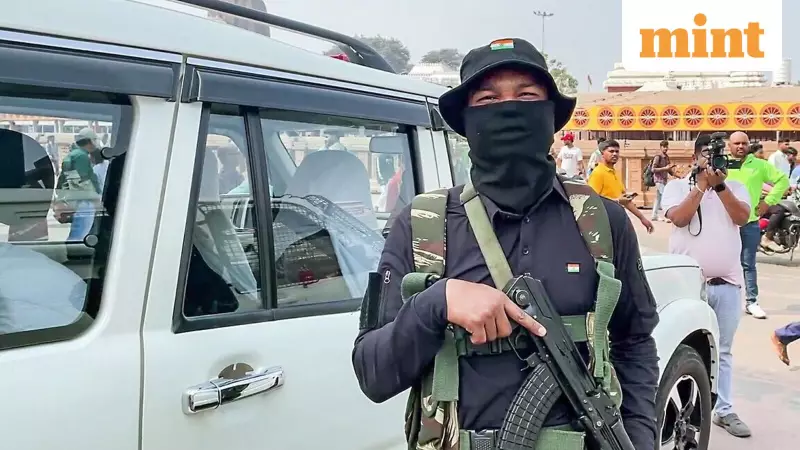
Puri Superintendent of Police Prateek Singh confirmed that security cover was significantly increased near the Jagannath temple following the discovery of the online threat. "Devotees entering the temple are being properly checked," the SP stated, emphasizing the heightened vigilance around the religious site.
In a related development, BJD lawmaker Subhasish Khuntia revealed that he had been contacted by an unidentified individual several days earlier who demanded a payment of ₹10 lakh. The caller also pressured him to step down from his parliamentary position, suggesting possible connections to the broader threat scenario.
AI-Generated Videos of Lord Jagannath Prompt Police Complaint
In a separate but equally concerning development, officials at the Jagannath shrine in Puri have initiated a formal police complaint against a social media user for distributing artificial intelligence-produced images and videos of Lord Jagannath. These digitally manipulated materials spread rapidly across platforms, causing significant indignation among devotees and religious authorities.
Formal Complaint Filed
The Shree Jagannath Temple Administration (SJTA) filed the complaint at the Singhadwar police precinct on Monday, specifically targeting a social media profile titled 'vishvrajcreation' for purportedly sharing offensive depictions of the deity. According to the grievance registered by the shrine's special security officer, the AI-generated material has severely damaged the spiritual feelings of followers and ignited widespread bitterness within the religious community.
Nature of the Offensive Content
Jagannath heritage specialist Bhaskar Mishra provided details about one particularly offensive video that shows milk being cascaded over Lord Jagannath outside the Puri temple structure using a construction crane. "This is a completely manufactured and impractical portrayal with zero foundation in traditional rituals," Mishra emphasized, highlighting how the AI-generated content distorts religious practices and imagery.
Mishra further remarked that these fraudulent graphics have profoundly wounded the emotions of Lord Jagannath's worshippers, who hold the deity in the highest reverence. Temple representatives noted that while there have been previous cases of illicit photography and unauthorized sharing of footage from within the complex, this marked the first instance in which artificial intelligence technology was employed to produce media that disrespects the deity.
Legal Response and Future Safeguards
The Shree Jagannath Temple Managing Committee, the primary governing body of the 12th-century religious site, has recently resolved to update its legal statutes to ensure such actions are explicitly deemed unlawful and subject to appropriate penalties. This proactive measure aims to create stronger legal frameworks to combat digital disrespect and protect religious sentiments in the age of advanced technology.

These two incidents highlight growing concerns about the misuse of digital platforms and emerging technologies to threaten religious institutions, harass individuals, and manipulate religious imagery. Authorities in Odisha are taking both cases seriously as they navigate the complex intersection of technology, law, and religious sensitivity in contemporary India.