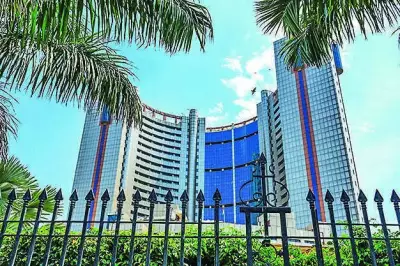
An accessibility audit of the district court in the Patiala House complex near India Gate, conducted by a voluntary organization as part of the Sugamya Delhi Abhiyan in January this year, has highlighted significant accessibility challenges in courts. The audit found missing or discontinuous tactile pathways, inadequate signage, and poorly maintained surfaces, making navigation difficult and often requiring assistance.
Broader Problem Across Indian Courts
The district court case study reflects a larger issue affecting most courts across states, as detailed in a working paper titled Accessible Justice, Inclusive Growth: Case for Courtroom Accessibility in India. This paper was prepared by the voluntary organization Inclusive Divyangjan Entrepreneur Association (IDEA) in collaboration with the Office of the Chief Commissioner for Persons with Disabilities (CCPD).
Findings Released on Global Accessibility Awareness Day
The findings, released on Global Accessibility Awareness Day on Thursday, draw from existing data and research to show that despite the Rights of Persons with Disabilities (RPWD) Act, 2016, and the national policy framework anchored by the Accessible India Campaign (Sugamya Bharat Abhiyan), courts across the country remain largely inaccessible to persons with disabilities, senior citizens, and other vulnerable groups.

The Patiala House case study reveals that while some basic features are in place, accessibility is inconsistent, fragmented, and often non-functional in practice. Corridors are frequently wide enough but lack supporting features such as handrails, anti-skid flooring, and clear directional guidance. Similarly, lifts and stairs lack certain accessibility features.
Inaccessible Daily Facilities
Elaborating on the findings, Mallikarjuna Iytha, founder of IDEA, said that everyday facilities such as canteens, drinking water points, and toilets are frequently inaccessible. For instance, level differences, obstructed pathways, and lack of accessible routes restrict entry to canteens, while no toilets are accessible in certain areas, severely impacting usability.
Supreme Court Report Highlights Barriers
The report also draws from a 2023 Centre for Research and Planning (CRP) report of the Supreme Court, which offered a critical reframing of courtroom accessibility in India. The CRP report highlighted that barriers persist across the entire user journey, from entry points and security checks to internal navigation and the courtroom itself.
District Court Accessibility Statistics
On accessibility in district courts, the paper cites the 2023 report, which stated that more than 50% of district court complexes did not have ramps. Wheelchairs were available at only 25% of court complexes, tactile paving to assist persons with visual impairments at just 5%, separate disabled-friendly toilets at 30% of complexes, and sign language interpreters to assist persons with hearing impairment in accessing court proceedings were present in only 2.8% of districts.
Recommendations for Improvement
Against this backdrop, the research paper makes wide-ranging recommendations, including greater digital inclusion, standardization, and capacity building, to ensure that India's e-courts ecosystem is accessible to all.