In a chilling case that tested the Pune Rural Police's investigative mettle, the bodies of a young woman and two toddlers were discovered burnt on the outskirts of a village. The breakthrough came not from high-tech forensics, but from the victims' own skin and a painstaking, old-fashioned search across Maharashtra.
The Gruesome Discovery in Khandale
On the morning of May 25, a call to the Ranjangaon MIDC police station sent shockwaves through the force. The Police Patil of Khandale village reported finding the partially charred remains of a woman, aged 25-30, and two children, around two and three years old. The site was near the Pune-Ahilyanagar Highway in Shirur taluka.
Multiple teams, including local police, the crime branch, forensics, and a dog squad, rushed to the scene. Initial evidence suggested the victims were killed elsewhere, transported to the isolated spot, and set ablaze to destroy evidence. Autopsies later confirmed death by head injuries prior to the burning.

Tattoos: The Only Clue to Identity
With no identification documents found, investigators focused on the woman's distinctive tattoos. She wore a yellow floral sari and a mangalsutra. Her right hand bore a heart-shaped tattoo, an ECG heartbeat line, and the words 'Mom' and 'Dad' in English. It also had 'Jai Bhim' in Marathi. The back of the same hand had the name 'Kartik' in Marathi, two hearts with the letters R and S, and the name 'Rajratan'. Her left hand featured a floral design.
Despite public appeals with these tattoo details, the woman's identity remained a mystery. SP Sandeep Singh Gill, newly heading Pune Rural Police, took direct charge. Seven teams scanned 250 CCTV cameras across 150 km, probed 16,500 local residents and workers, and checked bank accounts for the names from the tattoos. Health workers were consulted for vaccination records, and known criminals were scrutinized. Heavy rain at the crime scene had washed away potential clues, compounding the frustration.
A Statewide Strategy That Worked
Facing a dead end, SP Gill convened a meeting and ordered a radical, laborious tactic. He formed 36 special teams and dispatched them to every district in Maharashtra with one mission: scour through all records of missing persons.
This massive effort paid off. A missing persons report from Majalgaon police station in Beed district perfectly matched the descriptions. The woman was identified as 25-year-old Swati Sonawane from Vaghora, Majalgaon, reported missing by her husband Keshav Sonawane on May 9.
The investigation revealed Swati had gone to her parents' home in Alandi with her sons due to marital discord. On May 23, around 9 pm, she and her children—Swaraj (2) and Viraj (1)—left with Gorakh Popat Bokhare (36), her cousin's brother-in-law.
The Affair and a Brutal End
Police soon uncovered that Bokhare, who had tried to mediate the couple's fights, had begun an affair with Swati. She was pressuring him to marry her. On that fateful night, Bokhare took them on his motorcycle towards Saradwadi in Shirur, where he lived.
Instead, he took a deserted road towards Khandale. There, he strangled Swati and her two sons, then bludgeoned them with a rock. To erase his crime, he doused the bodies in petrol and set them on fire.
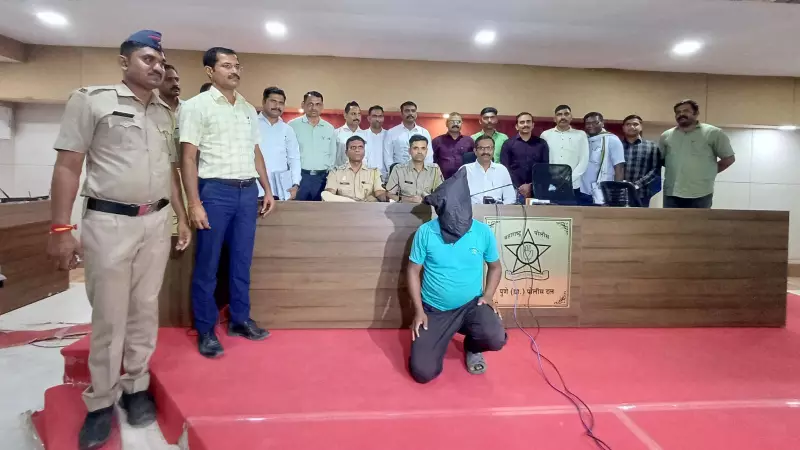
Acting on the identity breakthrough, Pune Rural Police detained Bokhare. He confessed to the brutal triple murder. Arrested in the first week of June, he was charged with three counts of murder and destruction of evidence. He remains in judicial custody, with a chargesheet already filed.
The case highlights how relentless ground investigation and a simple, wide-net strategy can crack even the most complex crimes, bringing a ruthless killer to justice.