

Pune Pocso Cases: Delayed Trials and Systemic Failures Lead to Acquittals
In a distressing revelation from Pune district, an 11-year-old girl, allegedly sexually assaulted by a family member in 2021, is among several Protection of Children from Sexual Offences (Pocso) Act cases where prolonged trial delays have resulted in acquittals. This case underscores broader systemic issues plaguing the judicial process for child sexual abuse victims.
Case Details: A Timeline of Delays
The alleged assault occurred on October 14, 2021, with the child's mother filing a First Information Report (FIR) on November 16, 2021. Police acted swiftly, submitting a chargesheet by December 6, 2021, leading to the accused's incarceration. However, the wheels of justice ground to a halt thereafter.
Charges were framed only on December 2, 2024—a staggering delay of over three years. When the survivor's evidence was finally recorded in November 2025, she had turned hostile, severely weakening the prosecution's case and ultimately leading to an acquittal.

Broader Pattern in Pocso Trials
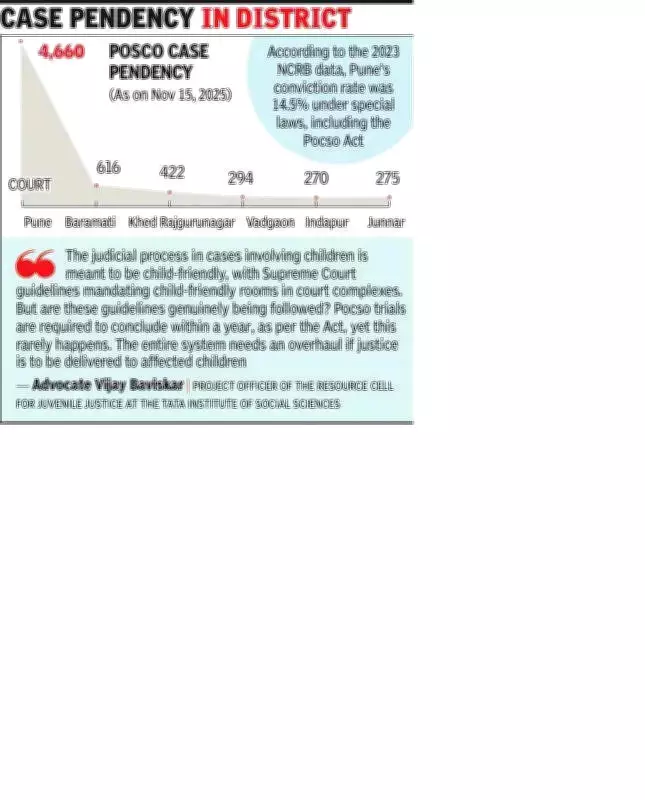
Legal experts point out that this case is not an isolated incident but reflects a pervasive pattern in Pocso trials across Pune. Prolonged proceedings often culminate in acquittals, with data revealing that 6,537 Pocso cases were pending in Pune district courts as of November 15, 2025. These cases constitute a significant portion of those registered under special laws.
Public prosecutor Leena Pathak highlighted critical issues: "In serious offences under the Pocso Act, accused often secure bail due to delays in filing chargesheets and prolonged trials. If witnesses do not turn up or evidence is not recorded in time, it weakens the prosecution's case." She added that some accused intentionally avoid engaging lawyers to delay charge framing, later seeking bail from higher courts citing prolonged incarceration.
Factors Contributing to Delays and Acquittals
- Family and Social Pressure: In many Pocso cases, the accused are known to the survivors, making them vulnerable to mounting family and social pressure over time, which can lead to witnesses turning hostile.
- Procedural Lapses: Long waits for forensic and DNA reports, which can take up to a year, coupled with the heavy workload on public prosecutors, exacerbate delays.
- Lack of Support Systems: Sharmila Raje, cofounder of NGO Muskaan, emphasized the absence of consistent counselling for children throughout trials. "Preparing a child for every hearing, only to face postponements, is extremely hard. Repeatedly revisiting the trauma is damaging," she said.
- Socio-Economic Challenges: Raje noted that younger children may forget critical details, and families often face practical hurdles. "Daily wage workers lose income attending court, and some eventually accept compromises. Even educated families grow weary of delays and give up."
Systemic Overhaul Needed
Advocate Vijay Baviskar of the Tata Institute of Social Sciences stressed that while Supreme Court guidelines mandate child-friendly courtrooms and Pocso trials should conclude within a year, these provisions are rarely implemented effectively. "The entire system needs an overhaul if justice is to be delivered to affected children," he asserted.
According to 2023 National Crime Records Bureau (NCRB) data, Pune's conviction rate under special acts, including the Pocso Act, stood at a mere 14.5%. Advocate Milind Dattatraya Pawar, former President of the Pune Bar Association, clarified: "The low conviction is not a failure of the judiciary, but a reflection of deficiencies in investigation, evidence collection, and witness management. For justice to be achieved, law alone is not enough. Its effective implementation is equally important."
Child rights activists warn that unless trials are completed within the mandated one-year timeframe, convictions in Pocso cases will become increasingly difficult, perpetuating a cycle of injustice for vulnerable children.






