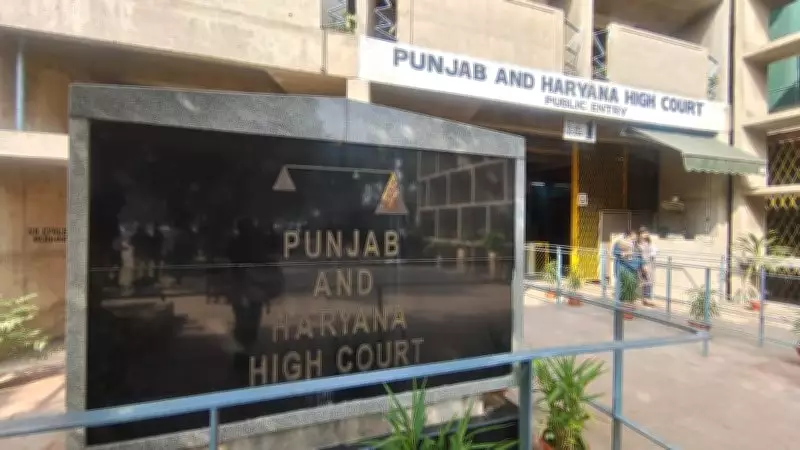
The Punjab and Haryana High Court has directed the Central Bureau of Investigation (CBI) to conduct further investigation into a Narcotic Drugs and Psychotropic Substances (NDPS) Act case, after finding the prosecution’s version of the accused’s detention and arrest “somewhat doubtful.” Justice Jasjit Singh Bedi also quashed the trial court’s November 13, 2024, order framing charges against the accused.
Case Background and Petition
The orders came on a petition filed by Kusum Rani and another petitioner, seeking a probe by the CBI or any other independent agency into an FIR registered on August 12, 2024, at the Adampur police station in Hisar under the NDPS Act. The high court directed the CBI to conclude the investigation within three months.
The controversy stems from the arrest of Kusum Rani’s husband, Lovkesh Kumar. According to the prosecution, 900 tablets of Diphenoxylate Hydrochloride and Atropine Sulphate were seized from Kumar after police acted on secret information on the intervening night of August 11-12, 2024.

Allegations of Illegal Detention
Kusum Rani, through her counsel Aditya Sanghi, Manik Midha, and Karan Duggal, contended that Kumar was actually picked up by police from their residence at 5:38 am on August 11, 2024, but his arrest was shown post-midnight on August 12, 2024. In representations to senior police officers, she relied on CCTV footage, mobile tower data, and other material to allege illegal detention and false implication in the narcotics case.
During an inquiry ordered on her representations, police officials stated that Kumar was taken for interrogation on the morning of August 11, 2024, but claimed he was released at about 11 am and handed over to one Ramesh Kumar. However, Ramesh Kumar categorically denied ever taking custody of Kumar.
Court’s Observations and Legal Precedents
Justice Bedi reiterated the settled legal position that constitutional courts possess the power to direct a CBI investigation even after a charge-sheet has been filed, but such power is to be exercised sparingly and only in exceptional cases where necessary to ensure a fair, impartial, and credible investigation. Referring to a series of Supreme Court judgments, the bench applied these principles to the present case.
The court found the prosecution’s explanation difficult to accept. “It is the admitted position that Lovkesh Kumar was taken away for interrogation in the early hours on August 11, 2024. However, his arrest has been shown only post mid-night on August 12, 2024,” Justice Bedi observed.
“The explanation given by the investigating agency that Lovkesh Kumar had been released at 11 am on August 11, 2024, to one Ramesh Kumar and thereafter, arrested at night, has itself been found to be in violation of settled procedure by various police officers, including SIT, constituted post the order of this court dated March 13 this year,” the bench added.
Need for Independent Investigation
The bench noted the SIT’s conclusion that the investigation, though seemingly fair, could not be accepted “at its face value” in view of Ramesh Kumar’s categorical statement denying that custody had ever been handed over to him. “Therefore, the prosecution version appears to be somewhat doubtful,” the court held.
Referring to the need for an independent investigation in cases involving serious allegations of false implication, Justice Bedi observed: “In fact, where any person appears to have been falsely nominated as an accused by the police in a case where the minimum sentence is 10 years rigorous imprisonment then, for a fair and impartial investigation to take place it is imperative that the investigation should be handed over to an independent agency for the unvarnished truth to surface.”
Order and Implications
Finding “considerable merit” in the petition, the high court ordered: “The order framing charges dated November 13, 2024, is quashed. Further investigation of the present case is handed over to the respondent – CBI.” The decision underscores the judiciary’s role in ensuring fair investigations, especially when allegations of false implication arise in cases carrying severe penalties.