

Raza Academy Challenges Mandatory Vande Mataram Singing in Supreme Court
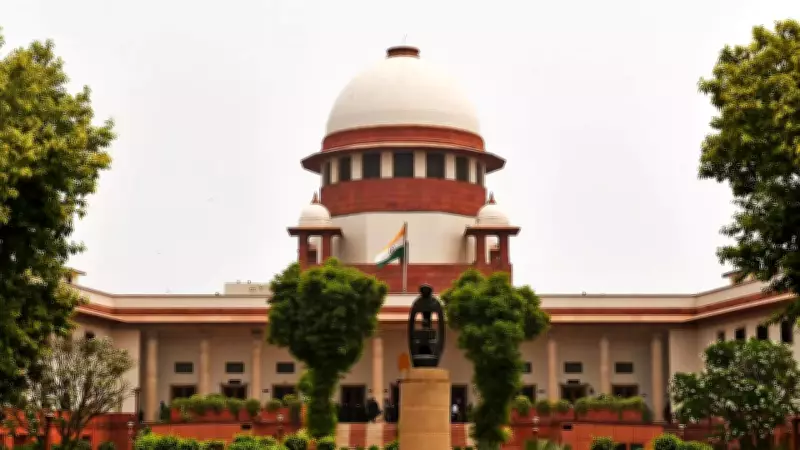
Mumbai-based Raza Academy president Muhammed Sayed Noori has filed a petition in the Supreme Court challenging the Centre's recent directive that all schools may begin the day's work with community singing of the complete version of the national song 'Vande Mataram'. The petition argues that this directive violates the constitutionally guaranteed religious freedom of Muslims and undermines India's secular fabric.
Constitutional Concerns Raised
Senior advocate Sanjay Hegde, representing Noori, presented the case before a bench comprising Chief Justice Surya Kant and Justices Joymalya Bagchi and Vipul M Pancholi. Hegde emphasized that India is a multi-religious nation where the Constitution guarantees every citizen the freedom to profess any religion. He argued that compelling individuals to sing the national song, which invokes the motherland as Hindu deities, places minority communities in an untenable position.
"The effect of the impugned directions is to place citizens, particularly those belonging to minority religions or monotheistic faiths in the untenable position of either participating in expressions contrary to their conscience, belief, or religion or risking being perceived as showing disrespect toward a national symbol," Hegde stated during the hearing.

Bench Questions Premature Nature of Petition
The Supreme Court bench questioned the timing of the petition, noting that the Centre's directive uses the word "may" rather than "must." The bench pointed out that the order states schools "may begin" the day with singing Vande Mataram, which does not make it mandatory. They asked Hegde to identify any part of the direction that explicitly requires singing the complete version or specifies penalties for non-compliance.
"It does not violate the right to speech as it does not compel anyone. You can approach the court when you are compelled to sing the national song," the bench remarked, suggesting the petition might be premature.
Historical Precedent Cited
Hegde drew parallels to a 2018 Supreme Court direction that made singing the national anthem mandatory in cinemas. He revealed that this earlier directive led him and like-minded individuals to stop watching films altogether. "Patriotism cannot be compelled. If the Constitution is to hold any meaning for an individual, then individual conscience must be protected," he asserted, highlighting the broader principle of protecting personal beliefs against state-imposed expressions of nationalism.
The bench maintained its stance that the current directive does not enforce compulsory participation, leaving room for individuals to abstain without facing consequences. However, Hegde's arguments underscore ongoing tensions between national symbols and religious freedoms in India's diverse society.






