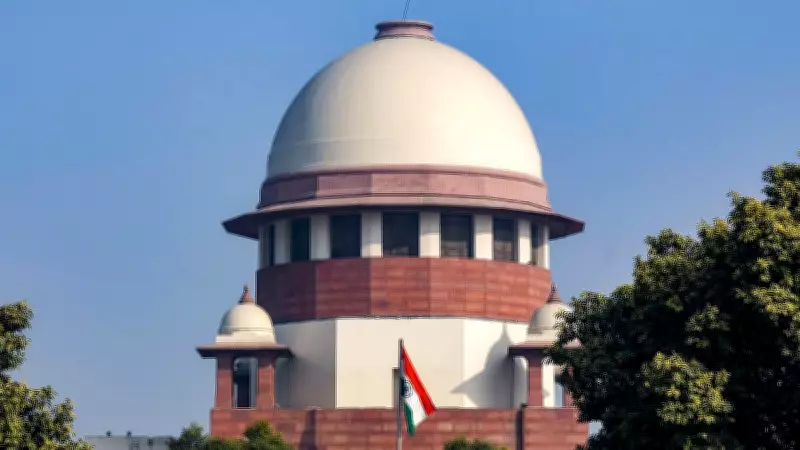
The Supreme Court on Monday declined to intervene in a petition seeking directions to the Himachal Pradesh High Court collegium regarding the elevation of a judicial officer, reiterating that collegium decisions are not subject to judicial review.
Court's Oral Observations
A bench comprising Justices B V Nagarathna and Joymalya Bagcha orally remarked that the petitioner, a judicial officer, should exercise patience as future vacancies would arise during his remaining 10-year service period. The bench emphasized that the collegium system operates on collective wisdom and its decisions cannot be scrutinized by courts.
“Collegium decisions are outside judicial review. We cannot direct the collegium to consider your name,” the bench stated, adding that the petitioner must wait for vacancies to occur naturally.

Petitioner's Grievance
The petitioner, a judicial officer in Himachal Pradesh, had approached the Supreme Court seeking a directive to the Himachal Pradesh High Court collegium to consider his name for elevation as a judge. He argued that his seniority and performance merited consideration, but the collegium had repeatedly overlooked him.
According to the petitioner, despite serving for over 20 years and receiving positive appraisals, his name was not included in the list of candidates recommended for elevation. He claimed that this amounted to arbitrary exercise of power by the collegium.
Legal Precedent
The Supreme Court’s stance aligns with established legal principles. In the landmark Second Judges Case (1993), the court held that the collegium system is an integral part of the appointment process and its decisions are not open to judicial review except on limited grounds of illegality or mala fides. The court has consistently maintained that the judiciary’s independence requires that appointments be made without external interference.
Senior advocate representing the petitioner argued that the collegium’s inaction violated the officer’s fundamental right to equality under Article 14 of the Constitution. However, the bench countered that the right to consideration for elevation is not an absolute right and is subject to the collegium’s discretion.
Future Vacancies
The bench noted that the petitioner has 10 years of service remaining, during which multiple vacancies in the Himachal Pradesh High Court are expected to arise. “You will get an opportunity in due course. Patience is required,” Justice Nagarathna observed.
The court further suggested that the petitioner could approach the High Court collegium again when vacancies occur, but declined to issue any direction at this stage.