

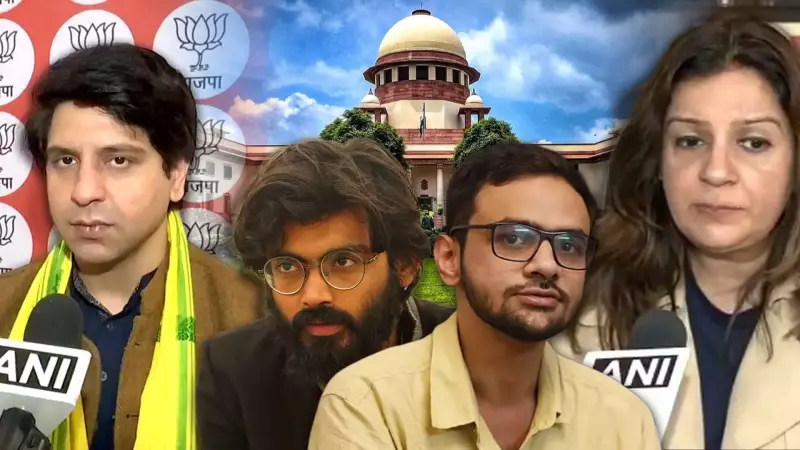
The Supreme Court of India has refused to grant bail to activists Umar Khalid and Sharjeel Imam in the high-profile 2020 Delhi riots larger conspiracy case. The decision, delivered on January 5, 2026, has immediately ignited a fierce political debate across the nation, highlighting the deep ideological chasm between the ruling party and the opposition.
Political Reactions: A Sharp Divide
The verdict was swiftly welcomed by leaders of the Bharatiya Janata Party (BJP), who framed it as a victory for the rule of law. They accused the opposition, particularly the Congress party, of defending individuals allegedly involved in orchestrating violence.
Prominent BJP voices, including Delhi Chief Minister Rekha Gupta and Assam Chief Minister Himanta Biswa Sarma, emphasized the need for strict legal action against the accused. Party spokesperson Shahzad Poonawalla underscored the judgment as a step towards safeguarding national integrity and justice for the victims of the riots.

Opposition's Call for Fair Process and Speedy Trial
In stark contrast, leaders from various opposition parties termed the bail denial as unfortunate and raised significant concerns about the judicial process. They argued for the fundamental right to a fair and expeditious trial.
Leaders like Priyanka Chaturvedi, Brinda Karat, and Manoj Jha pointed to the prolonged incarceration of the accused without a concluded trial. They expressed apprehension over what they described as the demonization of the accused and stressed that justice must not only be done but must also be seen to be done, without undue delay.
The Case and Its Broader Implications
The case pertains to the larger conspiracy behind the communal violence that rocked Delhi in February 2020. The prosecution alleges that Khalid, Imam, and others conspired to instigate the riots. The defense has consistently challenged these claims.
This bail rejection by the apex court is a significant development in the long-running legal battle. It ensures the two will remain in judicial custody as the trial proceeds. The sharply polarized political responses reflect how this legal case has become a touchstone for broader narratives around nationalism, dissent, and justice in contemporary India.
The focus now shifts to the pace of the trial proceedings, with the opposition's demand for a speedy process likely to gain more traction in public discourse following this verdict.






