

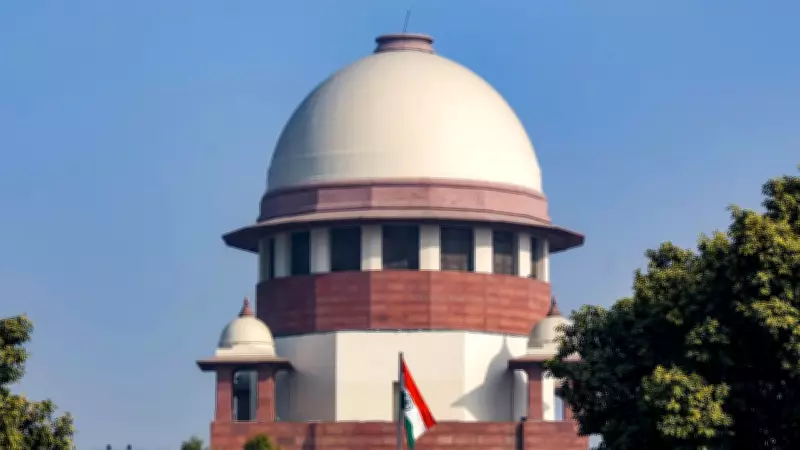
The Supreme Court on Wednesday commenced hearings on the validity of the law governing the appointment of the Chief Election Commissioner (CEC) and Election Commissioners (ECs). The law provides for a selection panel comprising the Prime Minister, a Union Cabinet minister, and the Leader of the Opposition (LoP). This comes after the apex court, in a 2023 verdict, had suggested that the committee should include the Prime Minister, the LoP, and the Chief Justice of India (CJI), while leaving the final decision to Parliament.
Petitioners Argue Against Executive Dominance
Appearing before a bench of Justices Dipankar Datta and Satish Chandra Sharma, advocates Vijay Hansaria and Gopal Sankaranarayanan contended that the 2023 verdict aimed to end the executive's exclusive prerogative in appointing the CEC and ECs. They argued that the new law, by excluding the CJI from the panel, effectively restores the government's dominance, as two of the three members are from the ruling side. The lawyers emphasized that an independent institution like the Election Commission must be manned by independent individuals, not by the government's men.
Court Questions Interference Post-Legislation
The bench, however, noted that the 2023 verdict had stated its order would be followed only until Parliament enacted a law. The court questioned how it could now interfere after the law has been passed. In response, the petitioners argued that the ratio of the judgment cannot be undone by Parliament.

Hansaria also highlighted that the Election Commission's role has come under criticism, calling it unfortunate that political parties resort to slogan-shouting on public platforms. Solicitor General Tushar Mehta, appearing for the Centre, countered by asking if the use of abusive language against a judge would necessitate changing the collegium system for judicial appointments.






