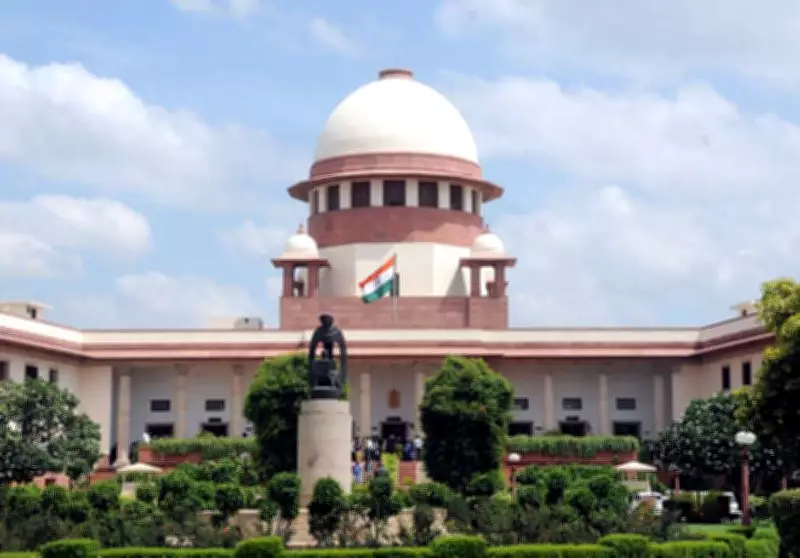
Supreme Court Acquits Three Central Excise Officers in 31-Year-Old Bribery Case
The Supreme Court has ruled that the mere presence of a public servant when a senior officer allegedly accepts a bribe is not sufficient to infer criminal conspiracy. A Bench of Justice Pankaj Mithal (since retired) and Justice Prasanna B Varale exonerated three Central Excise officers who were accused of participating in a bribery conspiracy, dismissing appeals filed by the State of Uttar Pradesh against an Allahabad High Court judgment acquitting them.
Key Legal Principle Established
The Bench noted, “The conspiracy cannot be inferred merely on the basis of suspicion or association and that there must be cogent material indicating meeting of minds between the accused persons. To establish a charge of conspiracy, knowledge about indulgence in either an illegal act or a legal act by illegal means is necessary. The offence is complete when there is a meeting of minds.” This ruling reinforces the requirement for substantive evidence to prove criminal conspiracy under Section 120B of the Indian Penal Code.
Case Background and Allegations
The case dates back to 1995 when the Central Bureau of Investigation (CBI) laid a trap in which Superintendent of Central Excise R.K. Srivastava allegedly demanded a bribe of Rs 80,000 for returning documents seized from a factory. Srivastava’s juniors — Inspectors AK Gaba, Alok Gupta, and Dushyant Kumar — who were present during the alleged demand or acceptance of the bribe, were charged with criminal conspiracy and certain provisions of the Prevention of Corruption Act. They were convicted by the trial court, but the Allahabad High Court acquitted them, holding that the prosecution failed to establish demand, acceptance, and conspiracy with regard to the bribe allegedly taken by Srivastava.

Supreme Court's Reasoning
Upholding the high court’s decision, the Supreme Court held that the offence of criminal conspiracy under Section 120B IPC was not established. Writing the judgment for the Bench, Justice Varale concluded that the prosecution failed to establish the prior meeting of minds between the accused persons to make them liable for criminal conspiracy. The court stated, “In the case at hand, except alleging presence of the respondents at certain places during the relevant period, the prosecution has failed to produce any substantive evidence indicating prior agreement or concert between the respondents and the principal accused R.K. Srivastava.” The top court emphasized that mere presence during the alleged acceptance of a bribe by a superior official would not be sufficient to hold them guilty of criminal conspiracy.
Impact and Implications
This judgment clarifies the standard of proof required for establishing criminal conspiracy in bribery cases involving public servants. It underscores that the prosecution must present cogent material demonstrating a meeting of minds, rather than relying solely on suspicion or association. The ruling is expected to influence future cases where junior officers are implicated based solely on their presence during corrupt acts by senior officials.