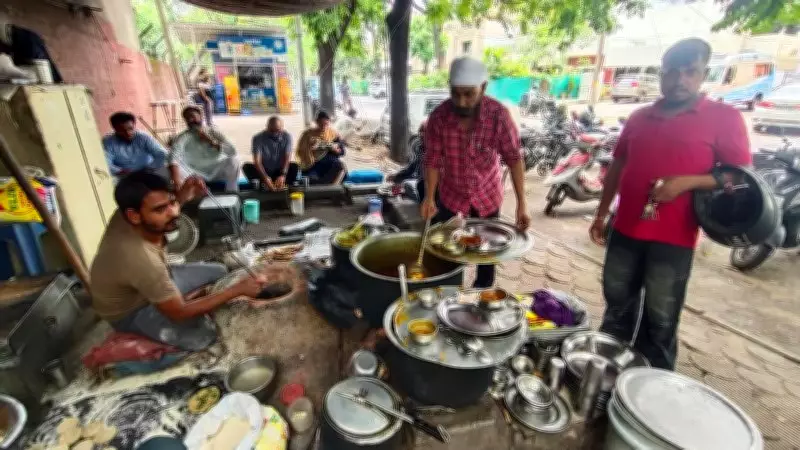
The Supreme Court of India has quashed a 2020 notification by the Chandigarh Administration that expanded the definition of Essential Service Providers (ESPs) to include vendors of chhole-bhature, kulche-chhole, parathas, fruits, vegetables, and flowers outside places of worship. As a result, roadside tandoors and other such stalls must be relocated from their current spots to designated vending zones meant for non-essential services, affecting dozens of long-standing businesses.
Impact on famous eateries
Narinder Singh, owner of Narinder Singh ji ka Dhaba in Sector 19, has operated his tandoor from the same location for over 42 years. His father started the business in Sector 18 before moving to Sector 19-C, where Union Minister Hardeep Singh Puri visited in 2024. Puri interacted with Singh’s father and enjoyed the dhaba’s dal tadka. The dhaba has also attracted cricketer Dinesh Mongia and comedian Jaspal Bhatti. Singh expressed uncertainty about the future, noting that relocation could destroy the business.
Vendors fear livelihood loss
Nepal Singh, who has sold kulche-chhole and parathas near the Post Graduate Institute (PGI) for years, said relocation could spell doom for such businesses. Mukesh Giri, a fruit vendor in Sector 42, stated that it is not possible to run a business from non-essential service provider (NESP) vending zones, which are often far from customer footfall. Suraj, a flower vendor, questioned why customers would travel multiple kilometres to buy flowers if shops are shifted away from temples, as people typically purchase flowers just before entering.

Background of the Supreme Court order
The Supreme Court order, issued on Wednesday, set aside the 2020 UT Administration notification that had amended bylaws under the Street Vendors (Protection of Livelihood and Regulation of Street Vending) Act, 2014. The notification had categorised these vendors as essential services, allowing them to operate outside places of worship. The court ruled that the expansion was not legally valid, forcing the Municipal Corporation of Chandigarh to relocate these vendors to designated zones for non-essential services.
Civic body's response
Municipal Commissioner Amit Kumar stated that the civic body is bound to implement the Supreme Court order. He added that the department concerned is examining how many vendors will be affected. The Municipal Corporation has been directed to file a compliance report by the next date of hearing. Kumar did not specify a timeline for relocation but assured that the process would follow the court's directives.
Broader implications for street vendors
The order also affects fruit, vegetable, and flower shops set up outside shrines, which were previously covered under the essential services category. The relocation could disrupt the livelihoods of dozens of vendors who rely on high footfall near temples and other religious sites. The Supreme Court's decision reinforces the original intent of the Street Vendors Act, which distinguishes between essential and non-essential services, and limits vending zones for the latter.