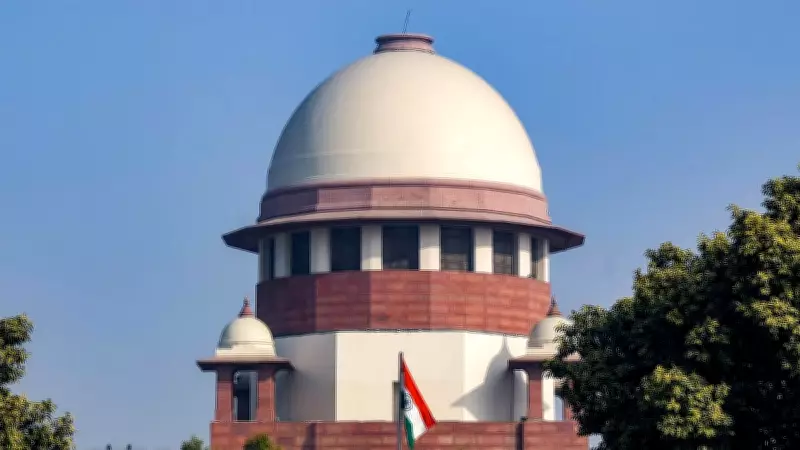
The Supreme Court of India has directed the Tripura State Election Commission to conduct elections to village committees in a single phase. The order came while the court was hearing a plea filed by Tipra Motha Party founder Pradyot Deb Burman, who alleged that the authorities had failed to conduct the elections in a timely and proper manner.
Background of the Case
Pradyot Deb Burman, a prominent political figure in Tripura, approached the Supreme Court seeking intervention in the matter of village committee elections. He argued that the delay and phased approach by the State Election Commission were against the principles of fair and democratic representation. The plea highlighted that the staggered elections could lead to administrative inefficiencies and potential manipulation.
Supreme Court's Directive
After hearing the arguments, the bench of the Supreme Court issued a clear directive to the Tripura State Election Commission to complete the entire election process for village committees in a single phase. The court emphasized the importance of conducting elections in a unified manner to ensure transparency and uniformity across all villages in the state.

The court also noted that the election commission must adhere to the constitutional mandate and ensure that the elections are free and fair. The order is expected to streamline the electoral process and address the concerns raised by the petitioner.
Reactions and Implications
The decision has been welcomed by Tipra Motha Party and other political stakeholders who had earlier expressed dissatisfaction with the phased election schedule. The single-phase election is likely to reduce administrative costs and logistical challenges while ensuring that all village committees are elected simultaneously.
The Tripura State Election Commission has been directed to submit a compliance report to the Supreme Court within a stipulated timeframe. The commission is expected to announce the revised election schedule soon, adhering to the court's order.
This development marks a significant step in the electoral reforms in Tripura, ensuring that grassroots democratic institutions are established without unnecessary delays.