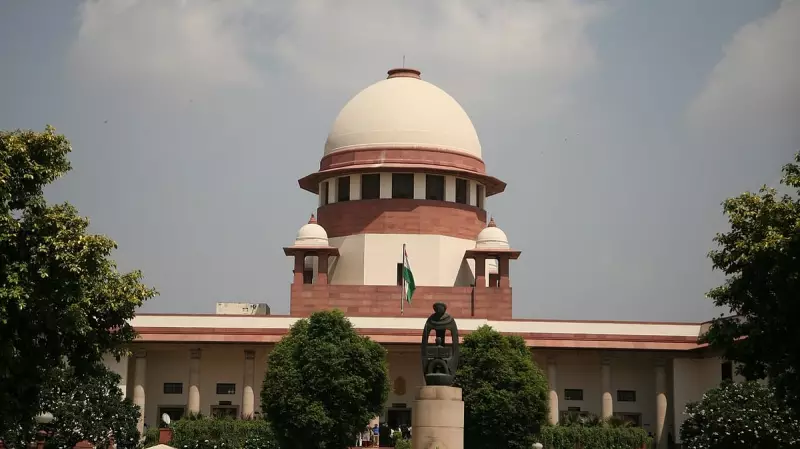
The Supreme Court of India has delivered a significant judicial ruling, expressing profound surprise and overturning a directive issued by the Madras High Court concerning the procedural handling of chargesheets and trial completions in a case involving a YouTuber. A bench comprising Justices Dipankar Datta and Satish Chandra Sharma explicitly set aside the High Court's order dated July 29, 2025, characterizing it as absolutely unwarranted and uncalled for.
Judicial Bench's Strong Reaction
In a notable development within India's legal landscape, the Supreme Court bench did not mince words in its assessment of the Madras High Court's judicial intervention. The justices articulated their astonishment, stating we are taken aback by the nature and implications of the High Court's order. This reaction underscores the bench's view that the directive overstepped judicial boundaries or misapplied legal principles in the context of criminal proceedings against the YouTuber.
Details of the Overturned Order
The Madras High Court's original order, which has now been nullified by the Supreme Court, pertained to specific mandates regarding the filing of chargesheets and the expedited completion of trials in the case. Legal experts suggest that such directives from a High Court could potentially interfere with the standard investigative and judicial timelines, raising concerns about due process and fairness. The Supreme Court's decision to set aside this order reinforces the principle that lower courts must exercise caution in issuing instructions that might disrupt established legal procedures.

Implications for Legal Proceedings
This ruling is expected to have broader implications for how courts across India handle cases involving digital content creators and online personalities. By overturning the Madras High Court's order, the Supreme Court has signaled a need for judicial restraint and adherence to procedural norms, especially in matters that involve emerging media platforms like YouTube. The decision may influence future cases where courts are tempted to impose stringent deadlines or conditions on law enforcement agencies and trial courts.
Context and Background
The case highlights the increasing intersection of technology, media, and the judiciary in India. As YouTubers and other online influencers gain prominence, their legal entanglements often attract significant public and judicial attention. The Supreme Court's intervention in this instance serves as a reminder that while the judiciary plays a crucial role in upholding justice, it must do so within the framework of existing laws and without undue haste that could compromise the rights of the accused or the integrity of the legal process.
In summary, the Supreme Court's strong rebuke and subsequent overturning of the Madras High Court's order mark a pivotal moment in Indian jurisprudence, emphasizing the importance of measured judicial action and respect for procedural safeguards in high-profile cases involving digital media personalities.