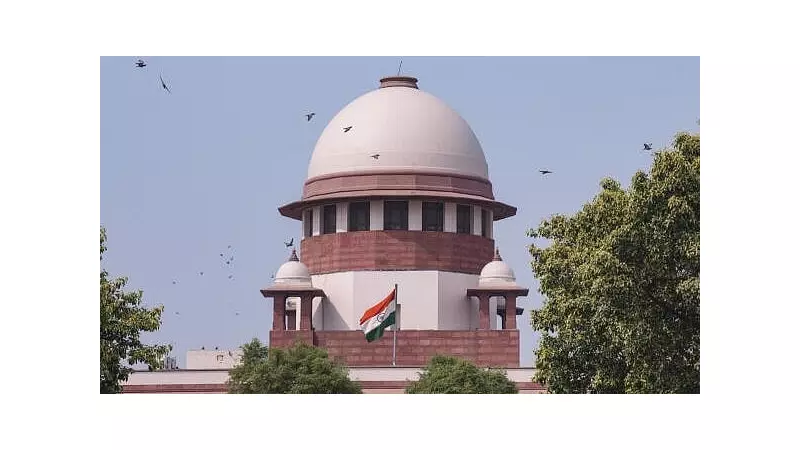
In a remarkable ruling that has sparked widespread discussion, the Supreme Court of India has set aside a conviction in a rape case, after the appellant and the victim solemnized their marriage. The apex court, while hearing a plea concerning the suspension of the sentence, revealed it had a 'sixth sense that parties can be brought together by marriage.'
A Chamber Interaction Leads to Unusual Resolution
The extraordinary turn of events unfolded on January 2, 2026. The bench was dealing with the appellant's challenge against the rejection of his application for suspension of sentence. Instead of a conventional courtroom proceeding, the judges opted for a highly personal approach. They conducted an interaction with both the appellant and the victim in their chamber, in the presence of their respective parents.
This in-camera, informal dialogue appears to have been pivotal. The details of the conversation remain private, but the outcome was a decision to quash the conviction entirely. The court's move underscores a rare instance where judicial process intertwined with personal reconciliation between the parties involved.

The Legal and Social Implications
The Supreme Court's decision to overturn the rape conviction following the marriage of the accused and the complainant raises significant legal and social questions. On one hand, it highlights the court's discretionary power to seek restorative solutions beyond punitive measures. The judges' reference to an intuitive 'sixth sense' suggests they believed a genuine resolution and future stability could be achieved through this union.
However, this ruling is likely to be scrutinized for its potential implications on how the justice system perceives crimes against women. Legal experts are divided, with some viewing it as a compassionate, case-specific resolution, while others express concern about the message it sends regarding the seriousness of such charges.
Key Facts and Figures
The report, filed by Ashish Tripathi and published on January 2, 2026, at 15:27 IST, provides the core facts. The central elements of the case are:
- Court: Supreme Court of India.
- Action: Quashed a conviction in a rape case.
- Key Reason Cited: A 'sixth sense' that marriage could unite the parties.
- Process: Chamber interaction with appellant, victim, and their parents.
- Original Plea: Appeal against rejection of sentence suspension.
The final outcome saw the court utilizing its authority to not just suspend a sentence, but to nullify the conviction based on the subsequent marriage and, presumably, the consent and will of the victim as expressed in the chamber meeting. This case will undoubtedly fuel debates on judicial innovation, restorative justice, and the evolving interpretation of legal remedies in complex interpersonal disputes.