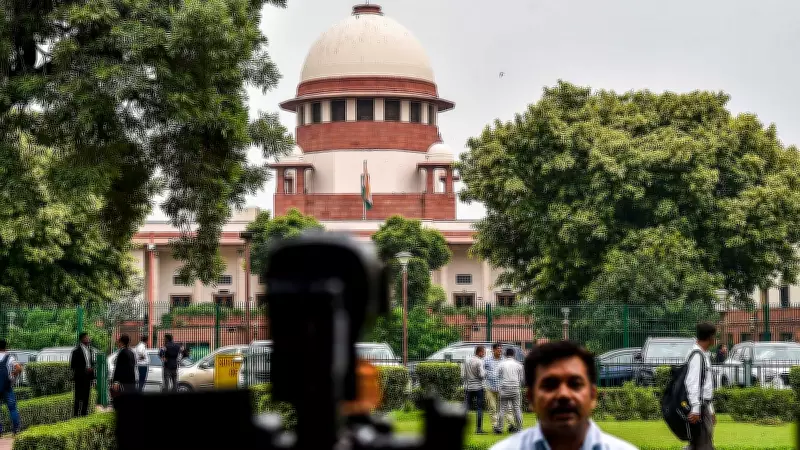
The Supreme Court of India has referred the matter concerning delay in granting bail under the Unlawful Activities (Prevention) Act (UAPA) to a larger bench, while refraining from making any specific observations on the case involving Umar and Sharjeel. The bench noted that there was a 'perceived conflict' among different benches regarding the interpretation of the three-judge bench judgment in Union of India v. K.A. Najeeb (2021).
Background of the Case
The case pertains to the prolonged detention of Umar and Sharjeel, who have been awaiting trial under the UAPA. The petitioners argued that the delay in trial and bail hearings violated their fundamental rights under Article 21 of the Constitution. The Supreme Court, however, decided to avoid making any direct remarks on the specifics of this case, instead focusing on the broader legal question.
Perceived Conflict in Judicial Interpretation
The bench observed that there is uncertainty among various High Courts and even within the Supreme Court regarding the application of the K.A. Najeeb judgment. In that landmark ruling, the Supreme Court had held that while UAPA imposes stringent conditions for bail, courts must balance individual liberty with national security concerns, especially when there is a prolonged delay in trial.

Key Issues Raised:
- Whether the delay in trial alone can be a ground for granting bail under UAPA.
- The extent to which the severity of the offense should influence bail decisions.
- The need for a uniform interpretation of Section 43D(5) of UAPA, which places restrictions on bail.
The larger bench will now examine these issues to provide clarity and consistency in future cases. The court emphasized that it is essential to resolve the conflicting views to ensure justice and avoid arbitrary detention.
Implications for Pending Cases
This referral is expected to impact several pending cases under UAPA, where accused individuals have been in custody for extended periods without trial. Legal experts believe that the larger bench's decision could set a precedent for how courts handle bail applications in national security-related cases.
The Supreme Court also directed that the matter be listed before the Chief Justice of India for the constitution of an appropriate bench. Meanwhile, the case of Umar and Sharjeel will remain pending until the larger bench delivers its verdict.