The Supreme Court of India has firmly dismissed a petition that sought to restrain Prime Minister Narendra Modi from offering a 'chadar' at the revered Ajmer Sharif Dargah. The plea, which was heard by a bench comprising Justices Sanjiv Khanna and Dipankar Datta, was rejected on the grounds that no individual can be barred from practicing their faith.
Court's Stance on Religious Freedom
The bench, while hearing the petition filed by a resident of Ajmer, made its position unequivocally clear. The judges emphasized the fundamental right to religion enshrined in the Constitution. The Supreme Court stated that it cannot stop anyone from practicing their faith or offering prayers at a place of worship. This principle formed the core of their decision to reject the plea outright.
The petitioner had argued that the Prime Minister's visit and offering could be seen as a political act ahead of elections. However, the court found no merit in this contention, highlighting that the act of offering a chadar is a personal religious observance.
Details of the Petition and Hearing
The plea was filed by a man named Haji Syed Salman Chishti, who identified himself as a 'Sajjadanashin' of the Dargah. He had requested the Supreme Court to issue directions to prevent the Prime Minister from performing the ritual. The petition was mentioned before the bench for an urgent hearing.
During the proceedings, the bench questioned the very maintainability of the petition. The justices pointedly asked the petitioner's counsel to explain under what legal provision the court could issue such a restraining order against an individual's religious practice. Unable to provide a satisfactory legal basis, the plea was subsequently dismissed.
Context and Significance of the Dargah
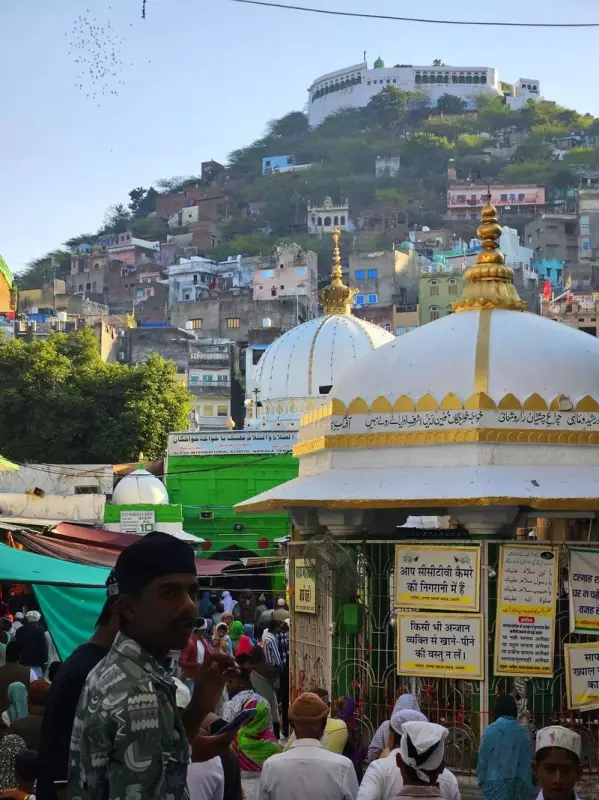
The Ajmer Sharif Dargah is the shrine of the revered Sufi saint Khwaja Moinuddin Chishti. It is one of the most significant pilgrimage sites in India, attracting millions of devotees from all faiths every year. The offering of a 'chadar' (a ceremonial cloth covering) is a traditional practice symbolizing respect and devotion.
Prime Minister Modi's planned visit is seen as part of a long-standing tradition where leaders from various backgrounds pay their respects at the shrine. The Supreme Court's dismissal reinforces the secular fabric of the nation, affirming that religious practices are personal and protected by law, irrespective of the individual's public office.
The swift dismissal of the petition underscores the judiciary's role in protecting constitutional freedoms while steering clear of unnecessary interventions in personal religious matters. This ruling sets a clear precedent against attempts to politicize acts of personal faith.