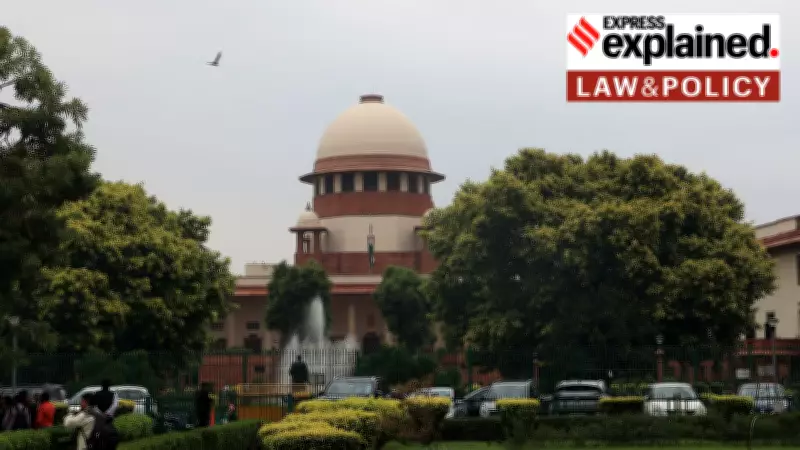
Supreme Court Questions Platform Liability in Landmark Shaadi.com Case
In a significant development that could reshape digital platform accountability in India, the Supreme Court has granted interim protection from arrest to Anupam Mittal, founder and CEO of the popular matrimonial website Shaadi.com. The court's intervention came in response to a cheating case registered against Mittal in Hyderabad, stemming from alleged fraud committed by a user on his platform.
Court Directs Fresh Examination of Legal Merits
The apex court, comprising Justices P K Mishra and N V Anjaria, set aside an earlier order by the Telangana High Court that had refused to quash criminal proceedings against Mittal. In a decisive move, the Supreme Court has now returned the matter to the High Court with specific directions to examine the case afresh on its legal merits.
The court emphasized that a judicial body cannot dismiss a quashing petition merely because the potential punishment appears light. Instead, it must determine whether the accused should face prosecution at all, based on the facts and applicable law. This clarification establishes an important precedent for how courts should approach such matters in the future.
The Hyderabad Romance Scam That Sparked the Legal Battle
The case originated from a complaint filed by a Hyderabad-based female doctor who registered on Shaadi.com in January 2025. According to the FIR registered at Jubilee Hills Police Station, the woman connected with a male user who presented himself as wealthy but claimed his bank accounts were frozen due to PAN card issues.
Over several weeks, the man allegedly:
- Promised marriage and claimed his mother was flying from Chicago to finalize their alliance
- Induced the woman to transfer approximately 11 lakh rupees to various bank accounts
- Threatened to morph and circulate her photographs on social media when she demanded her money back
How the Platform Founder Became Implicated
Initially, the FIR filed on February 25, 2025, targeted only the alleged fraudster. However, during the investigation, Hyderabad Police extended the case to include Mittal. The police contended that Shaadi.com had failed to properly verify the accused user's credentials, specifically noting the absence of government ID verification or a 'blue tick' for the profile in question.
Investigating officers alleged that the platform and its executives "cheated people who trusted them by taking money from them without knowing whether the details were correct or not." Mittal faced charges under multiple sections of the Bharatiya Nyaya Sanhita and provisions of the Information Technology Act related to cheating, criminal breach of trust, and identity theft.
The 'Intermediary' Defence and Legal Arguments
Mittal's legal team, led by Senior Advocate Atmaram Nadkarni, mounted a robust defence centered on Section 79 of the IT Act. This provision offers "safe harbour" protection to intermediaries—online platforms that host third-party content—provided they observe due diligence.
The defence argued that:
- Shaadi.com functions as a matchmaker, similar to newspaper matrimonial classifieds
- The platform includes explicit "Be Safe Online" guidelines and user agreements warning against financial transactions
- Since the alleged fraud occurred off-platform via WhatsApp and bank transfers, Mittal cannot be held vicariously liable
High Court's Initial Ruling and Supreme Court Intervention
When Mittal approached the Telangana High Court seeking to quash the FIR, the court disposed of his petition on April 24, 2025, without examining the legal validity of the charges. Instead, citing the Supreme Court's Arnesh Kumar guidelines for cases with potential sentences under seven years, the High Court directed police to issue a notice rather than arrest Mittal immediately.
The Supreme Court found this approach inadequate, noting that the High Court had failed to record any submissions on the "merits of the quashing"—essentially avoiding the crucial question of whether the allegations against Mittal, even if taken as true, actually constituted a crime he committed.
Broader Implications for Digital Platforms
This case raises fundamental questions about the extent of liability for online platforms when their users defraud each other. The Supreme Court's decision to send the matter back for fresh legal examination suggests the judiciary recognizes the need for clearer guidelines in this evolving area of law.
To ensure Mittal is not harassed during this renewed legal process, the Supreme Court granted him interim protection from arrest for eight weeks. The High Court must now specifically determine whether the FIR against Mittal should be quashed based on proper legal and factual analysis.
This development comes at a time when digital platforms face increasing scrutiny regarding their responsibility for user-generated content and interactions, potentially setting important precedents for how Indian courts balance platform accountability with intermediary protections in the digital age.