In a powerful demonstration of judicial resolve, the Supreme Court of India has executed a crucial reset in two high-profile cases that had gripped the nation's conscience: the environmental battle over the Aravalli hills and the harrowing Unnao rape case. These interventions, delivered on 30 December 2025, signify a robust reclamation of justice, directly responding to the profound emotional investment of the Indian public.
A Nation's Outcry Meets Judicial Action
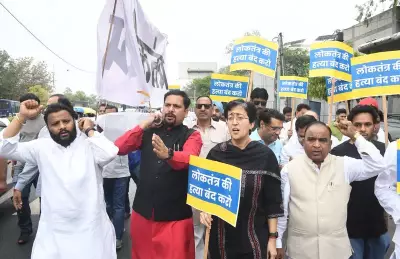
The rulings that initially emerged in both matters had sparked significant distress and disillusionment across the country. In the Aravalli case, concerns over the degradation of a critical ecological zone, and in Unnao, the pursuit of justice for a brutal crime, had become flashpoints for civic engagement. This public sentiment was not passive; it manifested in organized protests led by activists, civil society groups, and concerned citizens, who voiced their demand for accountability and legal rectitude. The Supreme Court, taking note of this palpable stake, stepped in to recalibrate the course of justice.
Dissecting the Twin Resets
The Aravalli case revolves around the protection of one of India's oldest mountain ranges, which has faced relentless threats from illegal mining and unchecked construction. The Court's reset implies a stricter enforcement of environmental norms and potentially a review of permissions that jeopardize this fragile ecosystem. It underscores the judiciary's role as the guardian of natural heritage against exploitative interests.

Parallelly, the Unnao case, a stark symbol of crimes against women and the abuse of power, saw the Supreme Court intervening to ensure a fair and expedited trial. The Court's action here is aimed at fortifying the legal process, protecting witnesses, and ensuring that influential entities cannot manipulate the wheels of justice. It sends an unequivocal message about the system's capacity for self-correction in the face of grave injustice.
Reclaiming the Pillars of Justice
The broader implication of these simultaneous resets is profound. They represent the apex court functioning as a stabilizing force, mending fissures in public trust. By actively listening to the collective voice expressed through civil society protests, the judiciary has reinforced the principle that justice must not only be done but must also be seen to be done. These moves highlight a responsive judicial system that can address both environmental pillage and personal violation with equal seriousness.
Ultimately, the events of 30 December 2025 mark a pivotal moment. They demonstrate that sustained public engagement and peaceful protest remain vital catalysts for accountability. The Supreme Court's rulings have not just altered the legal trajectory of two specific cases; they have reaffirmed the enduring dialogue between the people of India and their highest constitutional court.