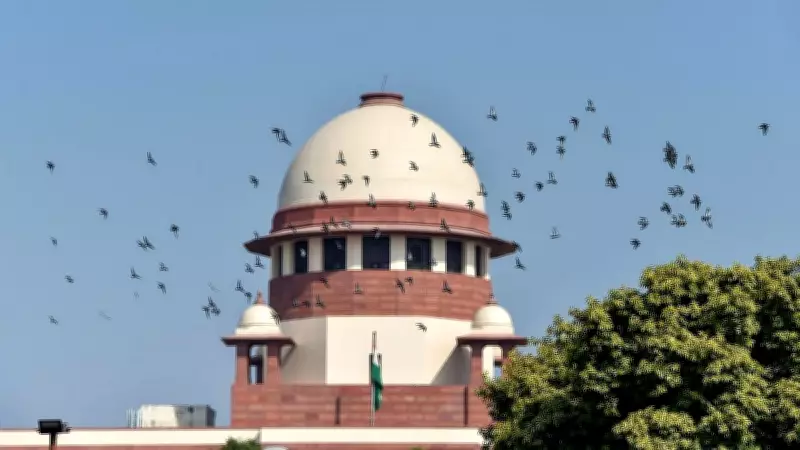
The Supreme Court on Tuesday issued notices to the central government, the National Commission for Protection of Child Rights (NCPCR), and the National Human Rights Commission (NHRC) regarding a Public Interest Litigation (PIL) that seeks a complete ban on the employment of children in orchestras and spas across the country.
A bench comprising Justices highlighted the need to examine the issue, which raises serious concerns about child exploitation and violations of child rights. The PIL, filed by an activist, contends that children employed in such establishments are often subjected to hazardous working conditions, long hours, and psychological abuse, which amount to a violation of the Juvenile Justice (Care and Protection of Children) Act and the Child Labour (Prohibition and Regulation) Act.
Key Arguments in the PIL
The petitioner argued that orchestras and spas are not covered under the exceptions of the child labour laws, which permit children to work in family businesses or after school hours in non-hazardous occupations. However, the nature of work in these establishments is inherently exploitative and exposes children to moral and physical dangers. The PIL also points out that many children are trafficked or lured into these jobs under false promises, making it a broader issue of child trafficking.

Government's Response Sought
The Supreme Court has given the central government and the two commissions four weeks to file their responses. The court also directed the NCPCR and NHRC to submit detailed reports on the prevalence of child employment in such sectors and the effectiveness of existing enforcement mechanisms. The next hearing is scheduled after the responses are filed.
This development comes amid growing concern over child labour in India, where millions of children are still engaged in work that deprives them of education and childhood. The PIL seeks not only a ban but also stricter penalties for employers who violate the law. The court's intervention is seen as a significant step towards strengthening child protection laws and ensuring accountability.
The case has drawn attention to the need for better regulation of informal sectors where child labour often goes unnoticed. Activists have welcomed the court's move, hoping it will lead to concrete action against exploitative practices. The outcome of this PIL could set a precedent for similar cases involving child employment in other vulnerable sectors.