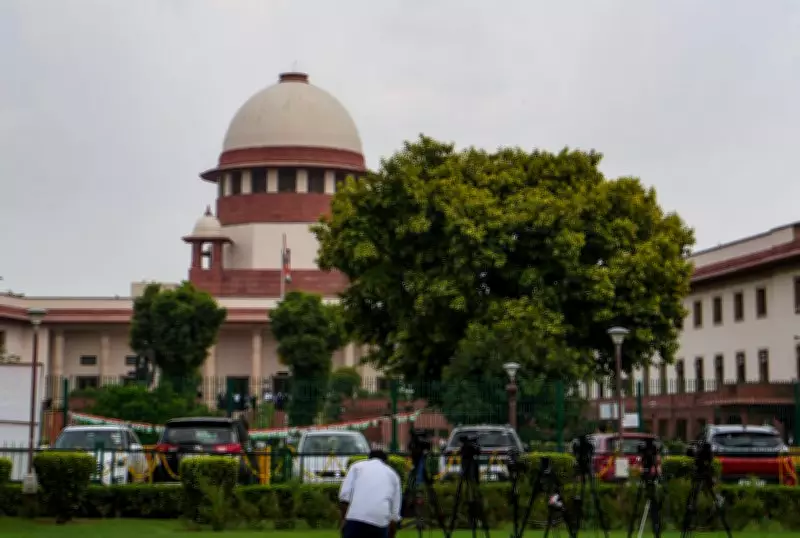
Supreme Court Reprimands Central Government in CISF Dismissal Case
The Supreme Court of India has issued a stern rebuke to the central government for its decision to challenge a High Court order that had set aside the dismissal of a Central Industrial Security Force (CISF) personnel. During the proceedings, the apex court questioned the government's motives and the legal basis for pursuing an appeal against the High Court's ruling, which had reinstated the employee.
Background of the Case
The case revolves around the dismissal of a CISF man, whose termination was overturned by the High Court. The High Court found procedural lapses and a lack of substantial evidence in the dismissal process, leading to the reinstatement order. Despite this, the central government opted to file an appeal in the Supreme Court, seeking to overturn the High Court's decision and uphold the dismissal.
Court's Critical Observations
In a strongly worded observation, the Supreme Court bench expressed its disapproval of the government's actions. The justices highlighted that the High Court had provided a detailed rationale for its decision, based on legal principles and factual analysis. The bench questioned why the government was persisting with the challenge, especially when the High Court's order appeared to be well-founded and aimed at ensuring justice for the employee.

The court emphasized that such appeals should not be filed frivolously and must have a solid legal foundation. It pointed out that the government's move could be seen as an attempt to undermine the judicial process and delay justice for the affected personnel. The bench also noted that the case involved a government employee's livelihood, making it a matter of significant personal and professional consequence.
Implications for Government and CISF
This development has broader implications for how the central government handles disciplinary cases within security forces like the CISF. The Supreme Court's criticism serves as a reminder that government actions must align with legal standards and procedural fairness. It underscores the importance of adhering to due process in employment-related matters, particularly in sensitive sectors like security.
The court's stance may influence future cases involving government employees, potentially leading to more cautious approaches in challenging judicial orders. For the CISF, this case highlights the need for robust internal mechanisms to handle dismissals and other disciplinary actions, ensuring they are transparent and legally sound.
Next Steps in the Legal Process
The Supreme Court has adjourned the matter for further hearing, giving the government time to reconsider its position or present stronger arguments. The bench indicated that it would closely scrutinize the appeal to determine if there are legitimate grounds for overturning the High Court's order. This ongoing legal battle will be closely watched, as it could set a precedent for similar cases involving government employees and their rights.
In summary, the Supreme Court's sharp criticism of the central government in this CISF dismissal case reflects a commitment to upholding judicial integrity and protecting employee rights. The outcome of this appeal will have significant ramifications for legal and administrative practices in India.