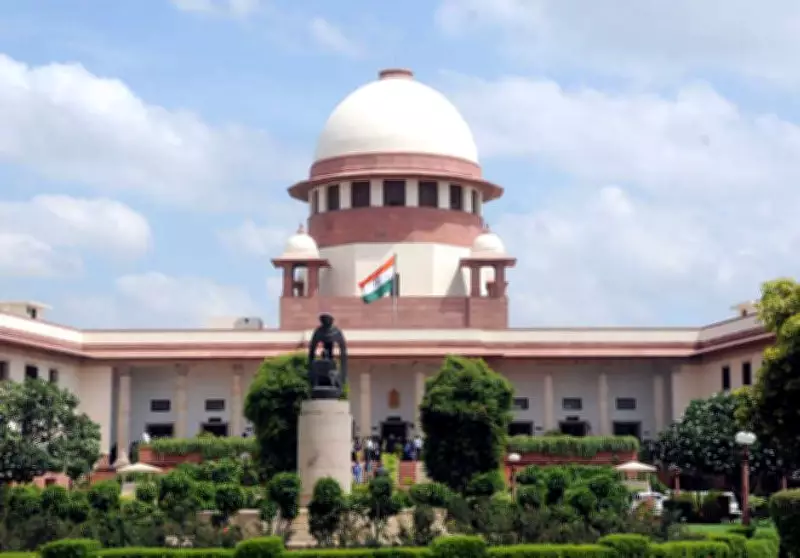
The Supreme Court on Friday stayed the Comptroller and Auditor General (CAG) audit of three private power distribution companies (discoms) in Delhi, dealing a setback to the Delhi government. The order came against the backdrop of a staggering Rs 38,500 crore accumulated as Regulatory Assets (RA) over the years, which are to be recovered from consumers in the national capital.
Court Orders Status Quo
A Bench of Justice KV Viswanathan and Justice Shree Chandrashekhar ordered a status quo on the CAG audit, stating that the legality of the Delhi Electricity Regulatory Commission's (DERC) decision to appoint the CAG raised questions requiring judicial determination. The Bench directed: "Till further orders, there shall be a stay of the Appellate Tribunal for Electricity (APTEL) direction on appointing any chartered accountant for audit. The CAG shall also not proceed with the audit in the meantime."
The court issued notice to the discoms and posted the matter for hearing on July 15, when the DERC's petition will be taken up. The order came on a DERC petition challenging an April APTEL ruling that the CAG audit of discoms was contrary to the statutory framework. APTEL had directed DERC to appoint an independent chartered accountant for the audit.

Background of the Audit
This was the first time the Delhi government ordered a CAG audit of private discoms since electricity distribution privatisation in the capital in 2002. The government had given CAG three months to complete a "strict and intensive" audit of the circumstances under which the three discoms—BSES Rajdhani Power Ltd (BRPL), BSES Yamuna Power Ltd (BYPL), and Tata Power Delhi Distribution Ltd (TPDDL)—continued without recovering regulatory assets.
Earlier, a Bench led by Justice PS Narasimha had directed that regulatory assets worth Rs 27,200 crore be paid within three years to the discoms. As of March 31, 2024, the RAs stood at Rs 12,993 crore for BRPL, Rs 8,419 crore for BYPL, and Rs 5,787 crore for TPDDL, totalling Rs 27,200 crore. The 2025 verdict came on petitions by the discoms against DERC tariff orders that led to ballooning regulatory assets.
Arguments in Court
Solicitor General Tushar Mehta, representing DERC, submitted that the Lieutenant Governor had approved the CAG audit in compliance with procedural requirements identified by APTEL. He said the government's concern was to prevent consumers from being burdened with recovery of regulatory assets before an audit established how such liabilities had accumulated. "The direction was to liquidate. Liquidation has been prohibited by the LG yesterday. They want recovery without the audit. Consumers should not be saddled with the cost they will have to pay if they go ahead with the liquidation," Mehta argued.
The Bench queried how the issue of liquidation of regulatory assets arose in an appeal confined to the legality of appointing CAG as auditor. Senior counsel Abhishek Singhvi, representing one discom, submitted that audit and recovery of regulatory assets were separate issues. Referring to the 2025 judgment, Singhvi said the roadmap for liquidation of RAs had been settled till 2031, and the current proceedings were limited to the legality of CAG's appointment for audit.
Impact and Next Steps
The stay halts the CAG audit until further orders. The Supreme Court will hear the DERC petition on July 15, examining the legality of appointing CAG for auditing private discoms. The outcome will determine whether consumers will face increased tariffs due to the accumulated regulatory assets, which have become a contentious issue between the Delhi government and power distribution companies.