

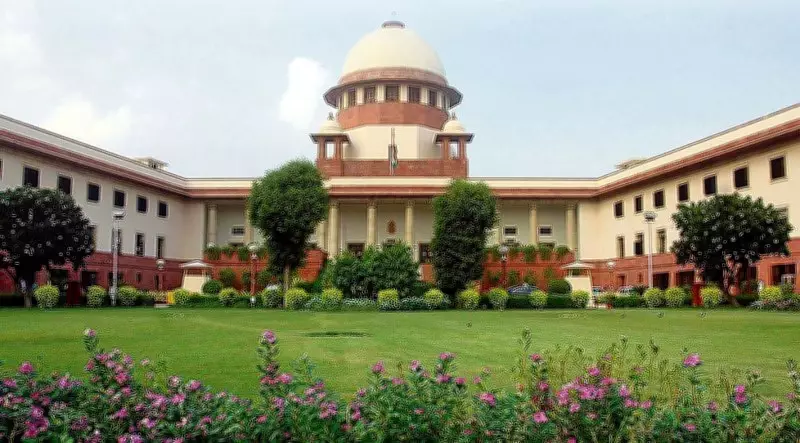
The Supreme Court on Tuesday stayed the Delhi High Court's recent order for premature release of Md Rashid Khan – a life-term convict under the Terrorist and Disruptive Activities (Prevention) Act (TADA) in the 1993 Bowbazar blast case in Kolkata. The blast killed around 70 people and destroyed multiple residential buildings.
Background of the Case
Khan had been in jail for more than 33 years. On June 5, the Delhi High Court allowed his release, citing his long period of incarceration, prison conduct, and the reformative philosophy underlying premature release of convicts. The March 16, 1993 Bowbazar blast, triggered by a massive cache of explosives stockpiled by Khan, claimed 69 lives and destroyed several residential buildings. This occurred just four days after the Mumbai serial blasts, which killed 257 people and injured over 1,400.
Supreme Court's Interim Order
Acting on a petition filed by the West Bengal government challenging the Delhi High Court's order, a Bench of Justice PK Mishra and Justice Sanjeev Sachdeva passed an interim order staying Khan's premature release. The Bench also issued a notice to Khan on the state's petition. "Notice. In the meanwhile, the impugned order to be stayed," the Bench said, posting the matter for July 28.

Arguments from Both Sides
The West Bengal government contended that the Sentence Review Board had recommended against Khan's release, but the high court still ordered his premature release. Additional Solicitor General SV Raju submitted that around 70 people died in the bombing and over 100 were injured as two buildings collapsed due to the explosions. On behalf of Khan, senior advocate MR Shamshad argued that Khan was not convicted of murder, suffered from various ailments, had been in prison for 33 years, and his conduct had been excellent. He also noted that co-accused Pannalal Jaiswara had been granted remission in 2014.
Court's Reasoning
The Bench pointed out that Khan and Jaiswara had different roles in the crime. The court chose to stay the high court's order, stating that Khan's role was that of a mastermind and his mind was fully functional. "This is almost terrorist activity… If we don’t grant interim relief (stay) and he is released in between then this will become infructuous," the Bench said. The Delhi High Court, while ordering Khan's premature release, had said, "It has been held that reformation should be the dominant objective of a punishment and during incarceration, every effort should be made to recreate the good man out of a convicted prisoner."






