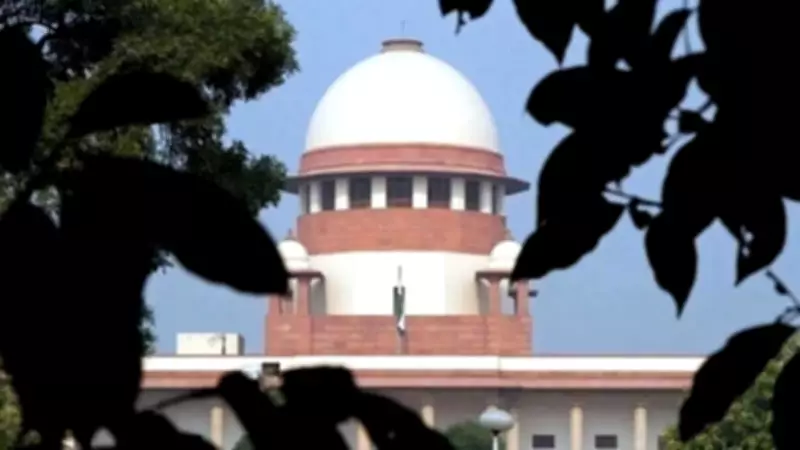
The Supreme Court on Monday struck down the Madhya Pradesh High Court's directions that required trial courts to examine the sanctioning authority before framing charges in a corruption case. The apex court termed the high court's order as legally unsustainable and an overreach of judicial power.
Background of the Case
The case originated from a corruption case against Ravi Shankar Singh, a public servant in Madhya Pradesh. The state government filed a writ petition before the Madhya Pradesh High Court, seeking to set aside the trial court's order that had summoned the sanctioning authority for examination before charges were framed. The high court, however, dismissed the petition and also rejected the subsequent review petition.
The state then appealed to the Supreme Court, challenging the high court's orders. The apex court bench, comprising Justices Vikram Nath and Prashant Kumar Mishra, heard the matter and delivered its verdict on June 22, 2026.

Supreme Court's Ruling
Justice Nath, writing for the bench, observed that the high court's directions were contrary to the established legal framework under the Prevention of Corruption Act. The court noted that the requirement to examine the sanctioning authority at the stage of framing charges would delay proceedings and defeat the purpose of speedy trial.
“The high court's order mandating the examination of the sanctioning authority before framing charges is not supported by law. Such a procedure would cause unnecessary delay and hamper the trial process,” the bench stated.
Legal Implications
The Supreme Court clarified that the validity of the sanction order can be challenged during the trial, but it is not a prerequisite for framing charges. The apex court also emphasized that the trial court has the discretion to decide whether to summon the sanctioning authority, based on the facts of each case.
The ruling is expected to have significant implications for corruption cases across the country, as it reinforces the principle that the framing of charges should not be unduly delayed by procedural requirements. Legal experts have welcomed the decision, stating that it will help streamline the trial process in corruption cases.
Reaction from the State
The Madhya Pradesh government welcomed the Supreme Court's verdict, with state advocate general stating, “The apex court has corrected a procedural anomaly that was causing delays in corruption trials. This will ensure that justice is delivered swiftly.”
The respondent, Ravi Shankar Singh, is expected to face trial in the lower court without the additional requirement of examining the sanctioning authority at the initial stage.