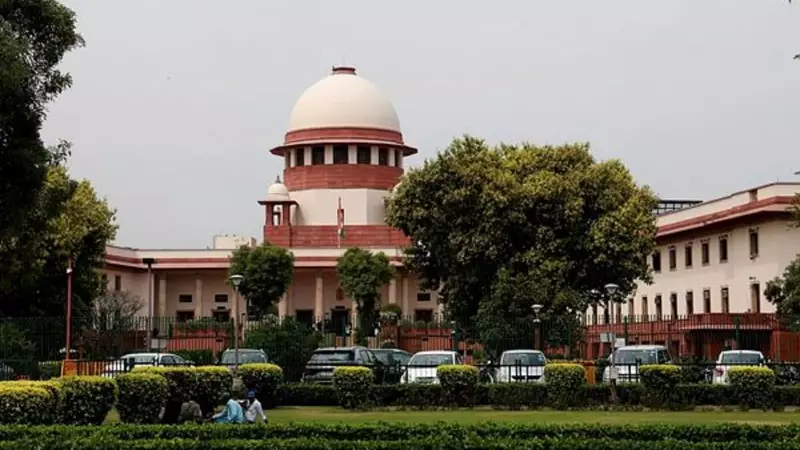
The Supreme Court of India has taken a strong stance on the need for more stringent measures to address acid attack cases, drawing parallels with the legal framework for dowry deaths. During a hearing on Tuesday, Chief Justice of India Surya Kant emphasized the urgency of legislative intervention to ensure harsher penalties and better protection for victims.
Legislative Intervention and Burden of Proof
Presiding over a three-judge bench that included Justices R Mahadevan and Joymalya Bagchi, CJI Surya Kant highlighted the necessity of shifting the burden of proof onto the accused in acid attack cases. This approach, similar to that used in dowry death cases, aims to make the legal process more rigorous and effective. The CJI stated, "Think of some legislative intervention. First should be shifting of onus (burden of proof), make it not less serious than dowry deaths." He further noted that such measures could significantly impact the outcomes of these cases, urging Additional Solicitor General Archana Pathak Dave, who represented the Centre, to consider this proposal seriously.
Extraordinary Punitive Measures
In a bold move, the CJI suggested attaching the assets of convicts in acid attack cases. These assets could then be auctioned, with the proceeds directed to the victims as compensation. "You have to take some extraordinary punitive measures. Unless the action is so painful for the accused, this is not going to (end). These are matters where the deterrence theory must be followed. Reformative theory has no place here. One should be extremely harsh, the system, the court and the police," CJI Kant asserted. This proposal underscores the court's focus on deterrence over rehabilitation in such severe crimes.
PIL by Acid Attack Survivor Shaheen Malik
The bench was hearing a Public Interest Litigation (PIL) filed by Shaheen Malik, an acid attack survivor who has been fighting for justice for 16 years. Malik, who was attacked at age 26 and is now 42, shared her harrowing experience, stating, "I gave the most precious years of my life to this battle. I hope at least now the trial will proceed fast and I will know where I stand... Whether I have failed, whether I have succeeded..." She revealed that all accused in her case had been acquitted, and she has filed an appeal before the High Court, urging expedited proceedings.
In response, the Supreme Court offered to appoint a lawyer for Malik at state expense to pursue her appeal, demonstrating its commitment to supporting victims through the legal process. The CJI assured, "Let the notice be issued. Meanwhile, you can tell the name of the advocate. Once you engage the counsel, let's see how it proceeds."
Status of Pending Cases and Rehabilitation
The court also addressed the backlog of acid attack cases across the country. In the previous hearing, the Supreme Court had sought details of pending cases, and on Tuesday, it was informed that 15 High Courts, including Allahabad and Calcutta, had filed status reports. For instance, Allahabad reported 198 pending matters, while West Bengal had 160. The court urged High Courts to consider issuing administrative decisions for expediting trials in acid attack cases on an out-of-turn basis.
Furthermore, the Supreme Court directed state legal services authorities to submit reports on schemes for victim rehabilitation, compensation, and medical aid. It questioned whether existing funds are sufficient and how much is actually being provided to victims. Malik's counsel noted that compensation is often restricted to medical reimbursement, highlighting gaps in support systems.
Challenges in Asset Attachment
While discussing the proposal to attach convicts' assets, concerns were raised about its feasibility, as many accused come from lower socio-economic strata and may not own significant immovable property. However, the CJI suggested a proactive approach: making it mandatory for police to collect asset details of the accused at the time of FIR registration and imposing an embargo on creating third-party rights on such assets. This could ensure that assets are available for attachment if a conviction occurs.
Victim Testimonies and Broader Implications
Malik's testimony shed light on the profound physical and emotional toll of acid attacks. She described undergoing 25 surgeries and the financial burden of expensive medical treatments, stating, "Lost my identity... Going to the operation theater every time, so expensive surgeries." She also highlighted that many victims lose their eyesight and lack adequate rehabilitation policies, calling for systemic changes.
In light of this, the Supreme Court has asked states and Union Territories to furnish detailed data on acid attack incidents, including year-wise reports, case outcomes, victim profiles, and expenditure on treatment and rehabilitation. The CJI directed that this information be provided within four weeks, stating, "Let us get this information, then we will decide what is to be done."
This hearing marks a significant step towards strengthening legal frameworks for acid attack cases, with the Supreme Court pushing for harsher measures, better victim support, and expedited justice to address this heinous crime effectively.