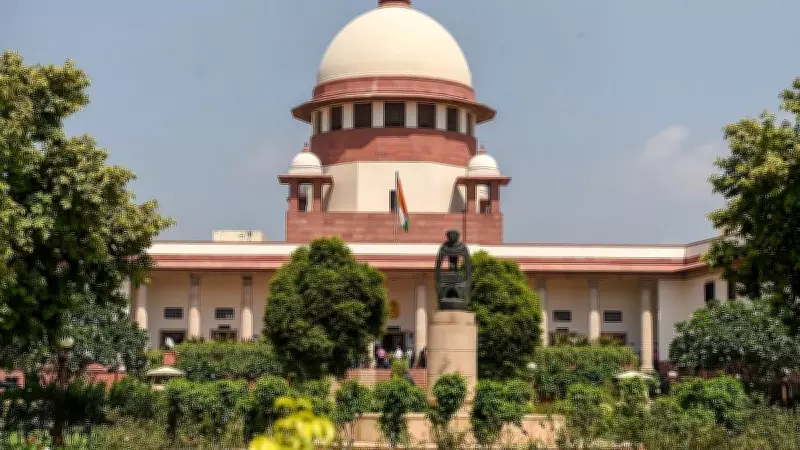
Supreme Court Takes Up Key Legal Question on Arrest Procedures
A bench of Justices Manoj Misra and Shree Chandrashekhar has agreed to examine the mandatory nature of providing written grounds of arrest, noting that conflicting pronouncements by coordinate benches of the Supreme Court have created legal uncertainty. The matter arises from the Meghalaya honeymoon murder case, where the accused challenged his arrest on grounds that the written grounds were not furnished as required under Article 22(1) of the Constitution.
Background of the Meghalaya Honeymoon Murder Case
The case involves the murder of a newlywed couple in a resort in Meghalaya. The prime accused was arrested without being provided written grounds of arrest, which he argued violated his fundamental rights. The trial court had rejected his plea, but the High Court directed the police to furnish the grounds. The state then appealed to the Supreme Court, leading to the current proceedings.
Conflicting Rulings by Coordinate Benches
The bench observed that earlier Supreme Court rulings have differed on whether the failure to provide written grounds of arrest vitiates the arrest itself. In some judgments, the court held that oral communication of grounds is sufficient, while in others, written grounds were deemed mandatory. This divergence has led to confusion among lower courts and law enforcement agencies.

Importance of Article 22(1) of the Constitution
Article 22(1) guarantees that no person shall be detained without being informed of the grounds of arrest as soon as may be. The Supreme Court has interpreted this provision to include both oral and written communication. However, the lack of a clear mandate on written grounds has resulted in inconsistent practices across states.
Arguments Presented Before the Bench
Senior counsel appearing for the accused argued that the right to be informed of grounds is a fundamental right and that written grounds are essential for the arrested person to prepare a defense and seek bail. The state, on the other hand, contended that oral communication suffices and that insisting on written grounds could hamper swift police action in sensitive cases.
Bench's Observations
Justice Misra remarked that the issue raises an important legal question that needs authoritative settlement. Justice Chandrashekhar added that the conflicting views of coordinate benches must be resolved to ensure uniformity in the administration of criminal justice. The court has directed the matter to be listed before a larger bench for final adjudication.
Impact on Police Procedures and Rights of Accused
If the Supreme Court mandates written grounds of arrest, it will require police to document and serve the grounds immediately upon arrest, potentially reducing arbitrary detentions. Conversely, if oral grounds are upheld, it may continue to allow flexibility for law enforcement. The decision will have far-reaching implications for criminal procedure and fundamental rights in India.
Next Steps in the Case
The Supreme Court has set a date for the larger bench hearing in October 2026. Meanwhile, the accused remains in custody. The outcome is awaited by legal experts and human rights advocates, who see this as a test case for the robustness of constitutional safeguards against arbitrary arrest.