

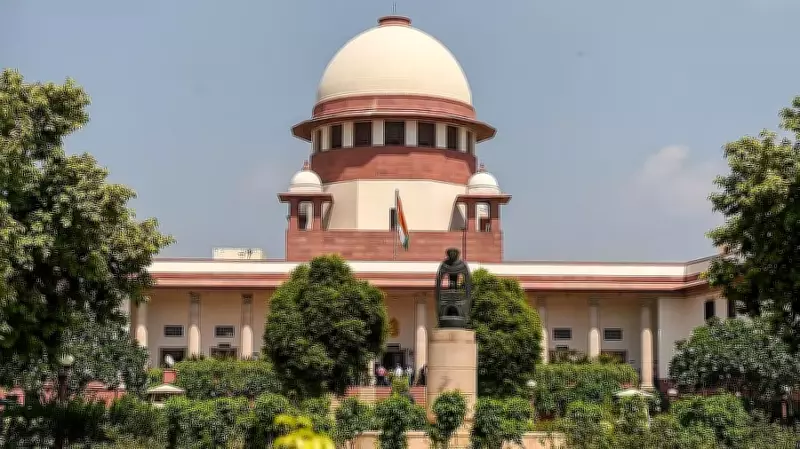
Supreme Court Probes Constitutional Safeguards for Believers Denied Deity Access
The Supreme Court of India has raised a pivotal question regarding the protection afforded by the Constitution to believers who are prohibited from touching a deity. This inquiry emerged during proceedings before a nine-judge Constitution bench, which is currently hearing a series of petitions addressing allegations of discrimination against women at various religious sites across the country.
Bench Examines Broader Issues of Religious Discrimination
The bench, comprising nine esteemed justices, is delving into complex legal and constitutional matters surrounding gender-based restrictions in places of worship. A significant focus of the hearings is the longstanding controversy at the Sabarimala Temple in Kerala, where women of menstruating age have historically been barred from entry. However, the court's deliberations extend beyond this specific case to encompass a wider spectrum of religious practices that may infringe upon fundamental rights.
The core issue under scrutiny is whether the Constitution provides recourse to individuals whose religious beliefs are impeded by institutional prohibitions. During the hearings, the bench posed a pointed question: "Will the Constitution not come to the rescue of a believer who is not allowed to touch a deity?" This query underscores the court's intent to evaluate the balance between religious traditions and constitutional guarantees of equality and freedom.

Context of the Sabarimala Temple and Other Petitions
The petitions before the bench include challenges to the Sabarimala Temple's restrictions, which have sparked national debate and legal battles for years. In 2018, a five-judge bench of the Supreme Court ruled to allow women of all ages to enter the temple, but this decision faced significant opposition and subsequent reviews. The current nine-judge bench is tasked with resolving broader constitutional questions that arose from these earlier rulings, potentially setting precedents for similar cases nationwide.
The hearings are part of a larger judicial effort to interpret religious freedoms in the context of India's secular and democratic framework. Other religious sites and practices involving alleged discrimination are also under consideration, making this a landmark case with far-reaching implications for religious and gender equality in India.
Implications and Expected Outcomes
Legal experts anticipate that the bench's ruling could redefine the boundaries of religious autonomy versus individual rights. Key aspects under examination include:
- The extent to which religious institutions can impose restrictions based on gender or other criteria.
- The role of the Constitution in protecting believers from discriminatory practices within their faith.
- Potential guidelines for balancing tradition with modern principles of equality and justice.
The Supreme Court's deliberations are closely watched by activists, religious groups, and policymakers, as the outcome may influence not only the Sabarimala issue but also similar disputes in other religious contexts. The bench's final decision is expected to provide clarity on how constitutional safeguards apply to believers facing exclusion in religious settings.






