In a significant move aimed at resolving decades of legal ambiguity, the Supreme Court of India has proposed the formation of a high-level expert committee to scientifically define the Aravalli Hills and Range. This landmark proposal seeks to establish a clear and authoritative definition that will have far-reaching implications for conservation, mining regulations, and real estate development across the National Capital Region (NCR) and surrounding states.
The Core of the Legal Confusion
The bench, comprising Justices B.R. Gavai and Sandeep Mehta, highlighted the persistent confusion stemming from varying definitions used by different states and government bodies. The court pointed out that the Survey of India, the Forest Survey of India, and individual state governments like Haryana, Rajasthan, and Gujarat often rely on differing interpretations of what constitutes the Aravalli range. This lack of a uniform, scientific definition has led to inconsistent application of environmental laws, particularly the provisions that prohibit or restrict non-forest activities in designated areas.
The court's observation came during a hearing related to a plea from the Kant Enclave Residents' Welfare Association, which challenged construction activities in the Aravalli region of Faridabad, Haryana. The residents argued that the construction violated the Forest (Conservation) Act, 1980, and a pivotal 1992 Supreme Court order that banned mining and non-forest activities in the Aravalli hills. The legal tussle underscores how the absence of a clear definition hampers effective enforcement and leaves ecologically sensitive zones vulnerable.

The Proposed Expert Committee Solution
To cut through this Gordian knot, the Supreme Court has suggested constituting a committee chaired by a former judge of the top court. This panel would include representatives from key institutions like the Survey of India, the Forest Survey of India, the Wildlife Institute of India, and relevant state governments. The committee's primary mandate would be to conduct a thorough scientific study and arrive at a conclusive, legally sound definition of the Aravalli hills and range.
The court emphasized that this definition must be based on geological, ecological, and historical parameters, moving beyond arbitrary administrative or political boundaries. Once established, this definition would serve as the bedrock for all future environmental clearances, mining leases, and land-use decisions in the region. The proposal has been put before the concerned parties, including the Haryana government and the residents' association, for their suggestions on the committee's composition and terms of reference.
Implications for Ecology and Development
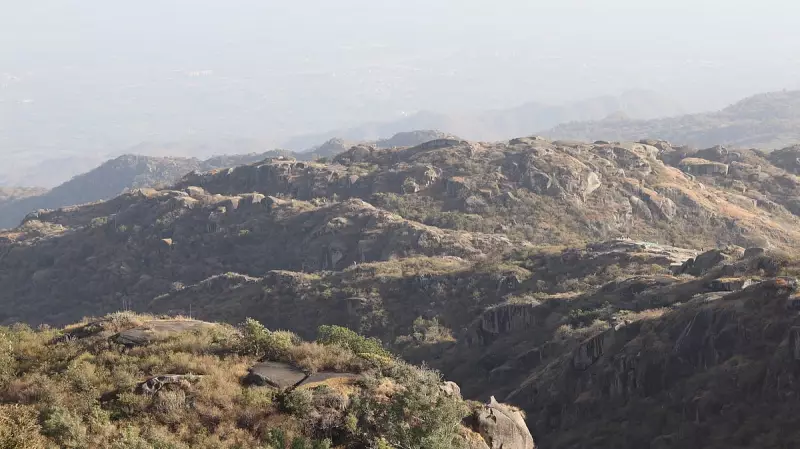
The Aravalli range, one of the world's oldest fold mountain systems, acts as a critical green barrier against desertification and a major groundwater recharge zone for the arid plains of north-west India. A clear, scientifically-backed definition is not merely an academic exercise but a vital step for safeguarding Delhi-NCR's fragile ecology, air quality, and water security. It will empower authorities to decisively identify protected areas, curb illegal mining, and regulate unsustainable construction that has plagued the region.
For state governments and developers, the move promises to bring much-needed regulatory clarity. However, it may also impose stricter constraints on projects currently in grey areas. The court's initiative reaffirms the judiciary's role in addressing complex environmental governance issues where executive action has been muddled. The final formation and report of the expert committee will be keenly watched, as its conclusions could reshape the environmental landscape of northern India for generations to come.