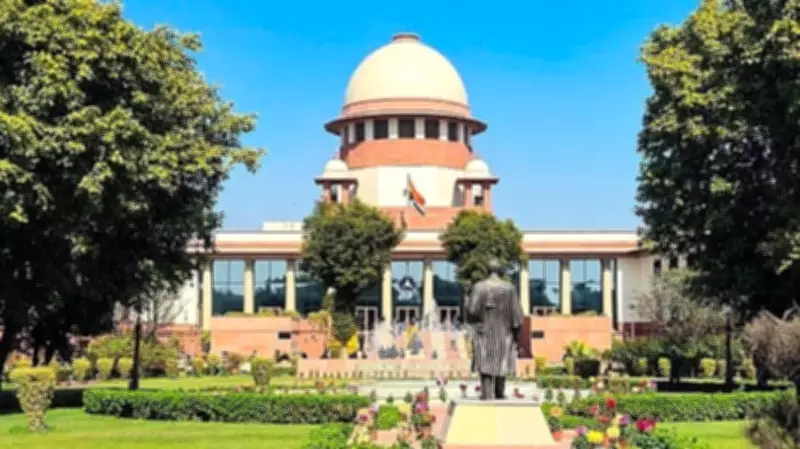
The Supreme Court on Monday refused to entertain a Public Interest Litigation (PIL) seeking a review of wages for priests and temple staff across the country. A bench comprising Justices Vikram Nath and Sandeep Mehta observed that such a petition cannot be entertained under Article 32 of the Constitution, which deals with the right to constitutional remedies. The court advised the petitioners to approach the appropriate high court or other relevant forum directly for any grievances related to remuneration.
Background of the Case
The PIL was filed by an organization representing temple employees, arguing that the wages paid to priests and other staff in temples are inadequate and violate constitutional principles of equality and dignity. The petitioners sought a directive from the Supreme Court to standardize and increase wages for temple workers, citing the essential nature of their services. However, the bench clarified that matters concerning service conditions and wages of temple staff fall under the purview of state governments or temple administration boards, not the Supreme Court under its original jurisdiction.
Court's Reasoning
Justice Nath, speaking for the bench, emphasized that Article 32 is not a remedy for every grievance but is reserved for enforcement of fundamental rights. The court noted that the issue raised in the PIL did not involve a direct violation of fundamental rights and could be addressed by other legal avenues. The bench also remarked that the petitioners had not exhausted alternative remedies before approaching the apex court. The court further observed that wage fixation for temple staff is a policy matter best left to the concerned authorities, including state governments and temple trusts.

The Supreme Court's decision underscores the principle that PILs should not be used to resolve service disputes or policy matters that can be adjudicated by lower courts or administrative bodies. The bench dismissed the petition without issuing any notice to the respondents, which included the central government and various state governments.
Reactions and Implications
Legal experts noted that the ruling reaffirms the limited scope of Article 32 and discourages frivolous PILs. Temple staff unions expressed disappointment but indicated they would pursue the matter in state high courts. The judgment may also impact similar pending PILs related to wages and working conditions of religious institution employees. The court's refusal to entertain the petition does not bar the petitioners from seeking relief through appropriate legal channels, including writ petitions before high courts.
The case highlights the ongoing debate over the economic rights of temple workers, who often rely on donations and meager salaries. While the Supreme Court has not ruled on the merits, the decision leaves the door open for state-level interventions. The bench concluded by stating that the petitioners are free to approach the relevant forum for any legitimate grievance.