

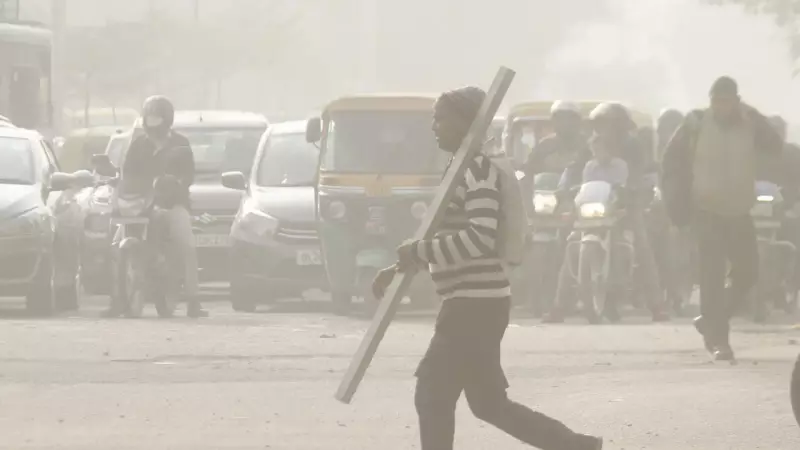
The Supreme Court of India on Monday expressed clear dissatisfaction with the persistent narrative blaming farm fires for the severe air pollution in Delhi-NCR. The bench, led by Chief Justice of India Surya Kant and comprising Justice Joymalya Bagchi, redirected the focus towards perennial sources of pollution and demanded concrete data on the effectiveness of existing government measures.
Court Shifts Focus from Stubble to Systemic Failures
The bench pointedly noted that stubble burning, often made a political issue, contributes to the crisis for only about 15 days during the winter months. Highlighting a crucial observation, the judges recalled that during the Covid-19 lockdown, stubble burning still occurred, yet the skies were clear enough to see stars. "You (government) say measures have been taken. Still, we can’t see stars," the bench remarked, questioning the tangible outcomes of the Graded Response Action Plan (GRAP).
Amicus curiae Aparajita Singh and Additional Solicitor General Aishwarya Bhati supported this view, emphasizing the need to address year-round pollution sources like vehicles, industries, construction, and dust. The court demanded detailed affidavits from the Union and NCR governments on steps taken against these sources and the verifiable results achieved.

Questioning Implementation and Long-Term Plans
The bench raised specific concerns about the unchecked proliferation of private vehicles, including "high-end gas guzzlers," and stressed that strengthening quality public transport is key. It acknowledged this as a long-term plan but underscored the immediate need for sincere enforcement of existing rules.
When Bhati informed the court that stubble burning incidents have reduced in Punjab, Haryana, and Rajasthan, the bench immediately asked if this led to improved air quality in Delhi-NCR. It also questioned the ground-level enforcement of construction bans under GRAP, to which Bhati admitted that the restrictions have not been scrupulously enforced.
Critique of Delays and Expert Bias
The hearing also brought to light significant delays in controlling industrial pollution. Senior advocate Ranjit Kumar informed the court that thermal power plants, mandated to install Flue Gas Desulphurisation (FGD) systems by 2021, have now been given extensions until 2027-2029.
In a notable comment, the bench cautioned against an "urban bias" in pollution control strategies. It suggested that action plans should be prepared by experts familiar with Indian ground realities, rather than those educated primarily at foreign institutions like Harvard.
The Supreme Court mandated that matters related to air pollution be heard at least twice a month throughout the year, insisting on intensive implementation of both short and long-term measures. The case has been scheduled for its next hearing on December 10.






