
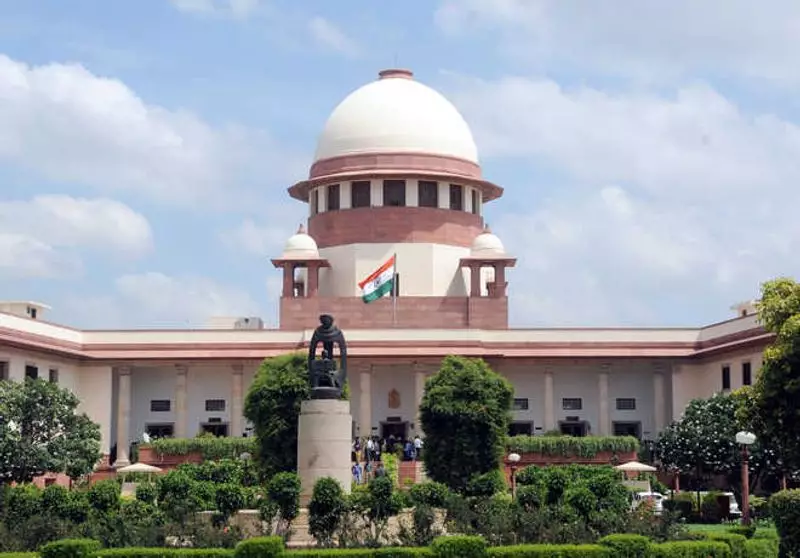
The year 2025 emerged as a defining chapter for the Supreme Court of India, characterized by a conscious and significant shift in its judicial philosophy. After periods of pronounced judicial activism, the apex court appeared to deliberately reset its compass, tilting decisively towards a doctrine of restraint, deference to legislative wisdom, and a recalibrated interpretation of its constitutional role.
The Pivotal Shift: From Activism to Restraint
This transformative phase was not an abrupt change but a culmination reflected in several landmark verdicts. The court demonstrated a renewed hesitancy to strike down parliamentary laws, opting instead for a posture of "constitutional deference". A prime example was its handling of challenges to the Digital Personal Data Protection Act. Rather than questioning the legislative policy choices, the bench focused on ensuring the law's implementation framework robustly protected fundamental rights, setting a new precedent for reviewing socio-economic legislation.
Furthermore, in matters involving complex fiscal and economic policy, the court explicitly acknowledged the limitations of judicial wisdom compared to that of the executive and legislature. This was evident in cases related to taxation and public spending, where the bench refused to act as a "super-legislature," emphasizing that policy corrections were the domain of the ballot box, not the courtroom.
Key Judgments Defining the New Approach
The year's jurisprudence was shaped by critical rulings that underscored this restrained stance. In a significant move, the Supreme Court revisited and refined the scope of Article 32, the fundamental right to constitutional remedies. It clarified that while the court remains the ultimate guardian of rights, the extraordinary writ jurisdiction must be exercised with caution, especially when alternative legal remedies are available. This aimed to prevent the dilution of this crucial power through overuse in non-emergency situations.
Another area of reset was in the appointment of judges to constitutional courts. The court, while upholding the collegium system, introduced a more transparent and structured dialogue mechanism with the central government. This sought to reduce public friction and institutional deadlock, acknowledging executive concerns while safeguarding judicial independence—a delicate balance struck through pragmatic restraint.
Implications and the Road Ahead for Indian Judiciary
The consequences of this judicial reset are profound and multifaceted. Proponents argue that this strengthens the separation of powers and democratic accountability by respecting the mandate of elected representatives. It is seen as a move that could enhance the perceived legitimacy of the court by keeping it away from the political thicket.
However, critics voice concern that an over-correction towards restraint might "weaken the court's role as a check on majoritarian excesses." They caution that in a vibrant democracy, the Supreme Court must remain an active shield for minority and individual rights, especially when other branches of government fail to act. The challenge for the future will be to maintain this equilibrium—exercising restraint without retreating from the constitutional duty to protect fundamental rights.
In essence, 2025 may be remembered as the year the Supreme Court of India attempted a great institutional recalibration. By tilting towards judicial restraint, it has sparked a crucial debate on the contours of judicial power in the world's largest democracy. Whether this marks a permanent new direction or a contextual phase will unfold in the court's future engagements with India's complex legal and social landscape.