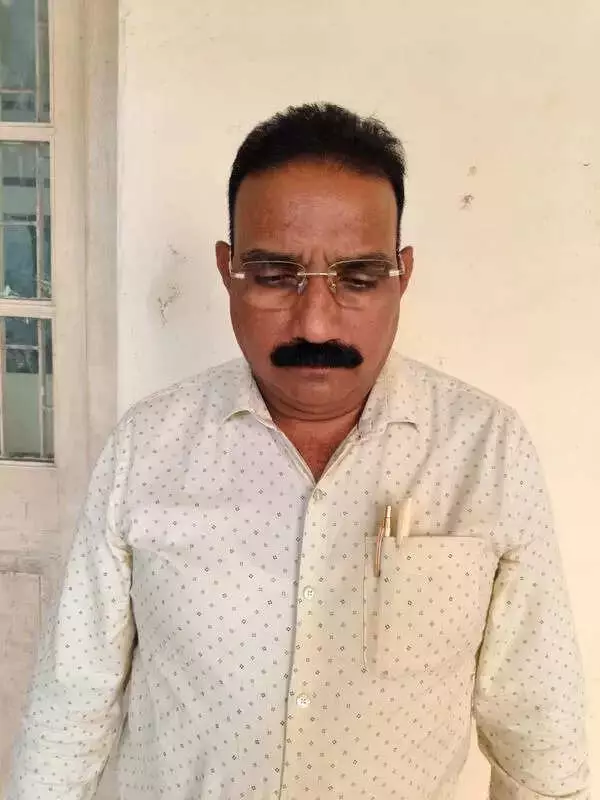
In a significant anti-corruption operation, a police head constable in Surat district was apprehended on Thursday while allegedly accepting a bribe of thirty thousand rupees. The arrest was made by officials of the Anti-Corruption Bureau (ACB).
Second Offense for the Accused Constable
The accused has been identified as Sheetal Prajapati, a 50-year-old head constable posted at the Kadodara GIDC police station. Shockingly, this is not Prajapati's first encounter with the ACB. He was previously arrested while serving as a constable in Surat city for accepting a bribe of Rs 3,500 from a tempo driver. The earlier bribe was taken in exchange for overlooking traffic violations.
Following that first arrest, Prajapati was transferred out of Surat city and district. However, he later managed to secure a transfer back to Surat district, where he allegedly resumed corrupt practices.

The Details of the Bribe Demand
According to the ACB's case, Prajapati had been demanding money from a complainant who was a former bootlegger. The key detail is that the complainant had already discontinued his illegal liquor activities. Despite the man no longer being involved in bootlegging, Prajapati allegedly continued to pressure him for a bribe.
Tired of the harassment and given his clean slate, the complainant refused to pay. Instead, he approached the Anti-Corruption Bureau and filed a formal complaint.
ACB Lays a Successful Trap
Acting swiftly on the complaint, the ACB team set a trap to catch the constable in the act. The operation was led by Navsari ACB police inspector B D Rathwa and supervised by assistant director R.R. Chaudhary.
The plan culminated in Antroli village, where Prajapati was caught red-handed by ACB sleuths while accepting the marked currency notes totaling Rs 30,000. The entire operation underscores the ACB's vigilant approach to tackling corruption within the police force.
The arrest highlights ongoing challenges of graft and the re-offending by officials previously penalized for corruption. It raises serious questions about the efficacy of transfers as a disciplinary measure and the systems in place to monitor officers with tainted records.