Telangana Police Introduces Groundbreaking Home FIR Registration System
In a pioneering move that marks a significant shift in law enforcement procedures, the Telangana Police has announced that First Information Reports (FIRs) can now be registered at the residences of complainants in specific sensitive cases. This innovative approach, initiated by the Telangana Criminal Investigation Department (CID), represents the first such initiative in the country and aims to make the justice system more accessible to vulnerable individuals.
Revolutionizing Traditional FIR Procedures
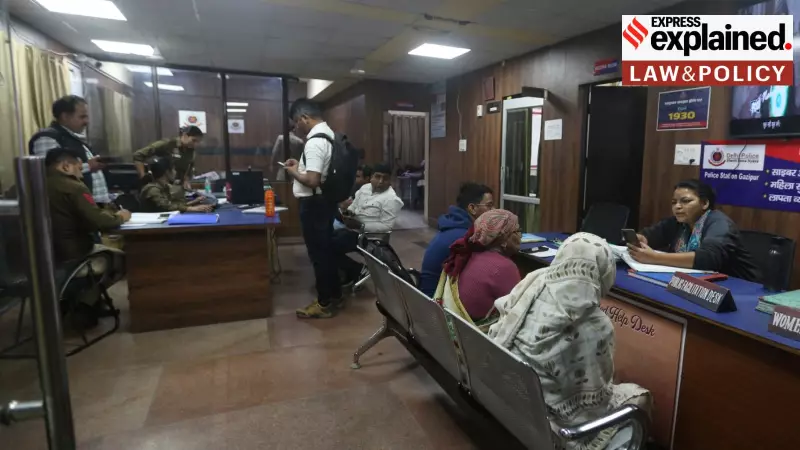
Traditionally, FIR registration across India has followed a standardized procedure where complainants must physically approach their nearest police station to file reports. These documents are typically registered in the presence of police witnesses, creating a station-centric model that has been the norm nationwide for decades.
However, Telangana is now breaking from this established practice with what CID officials describe as "citizen centric, on-site registration of FIRs." This transformative approach recognizes that victims in sensitive cases often face physical, emotional, or psychological barriers that prevent them from visiting police stations, even when prompt legal action is crucial for their safety and dignity.
Categories Eligible for Home FIR Registration
The new system applies specifically to several categories of sensitive cases where victims might be particularly vulnerable. These include:
- Offences against women and children
- Crimes affecting the human body
- Property-related offences
- Cases under the Protection of Children from Sexual Offences (POCSO) Act
- Incidents falling under the SC/ST (Prevention of Atrocities) Act
- Violations of the Prohibition of Child Marriage Act
- Cases under the Telangana Prohibition of Ragging Act
CID Chief Charu Sinha emphasized that this initiative specifically targets situations where victims or informants might be in "a vulnerable, delicate, or traumatic condition" that makes visiting a police station particularly challenging.
The New On-Site Registration Process
Under the revamped procedure, when police receive telephonic or oral information about a cognizable offence within the specified categories, jurisdictional officers (or any police officer in Zero FIR cases) will immediately proceed to the victim's preferred location. This could be the victim's residence, the place where the offence occurred, a hospital, or any other location chosen by the affected individual.
The complaint received at this location will then be forwarded to the concerned police station with the receiving officer's endorsement for FIR registration. Crucially, a copy of the FIR will be provided to the victim or informant at their chosen location rather than requiring them to visit the police station.
Additionally, where necessary, police will record statements under Sections 180 and 183 of the Bharatiya Nagarik Suraksha Sanhita at the same location. Simultaneously, officers will take appropriate steps to secure and protect the crime scene and physical evidence before proceeding with the investigation according to established legal protocols.
Moving Toward a More Compassionate Policing Model
CID Chief Sinha highlighted that this initiative represents a fundamental shift from a station-centric to a citizen-centric model of FIR registration. "Telangana Police is moving from a station-centric to a citizen-centric model of FIR registration in such cases, by taking the investigative machinery to the victim instead of insisting that the victim come to the police," Sinha explained.
This approach acknowledges that trauma, physical limitations, or psychological distress can create significant barriers for victims seeking justice. By bringing the registration process to them, the police aim to reduce these barriers while ensuring that crucial evidence is properly documented and preserved.
Standard operating procedures for this new process have been developed and distributed to all unit officers across Telangana, who will share and implement them through station house officers statewide. This systematic rollout ensures consistency in application while maintaining the flexibility needed for sensitive cases.
The introduction of home FIR registration in Telangana represents a significant advancement in making law enforcement more responsive to citizens' needs, particularly those in vulnerable situations. By prioritizing accessibility and compassion, this initiative could serve as a model for other states looking to modernize their approach to victim assistance and crime reporting.