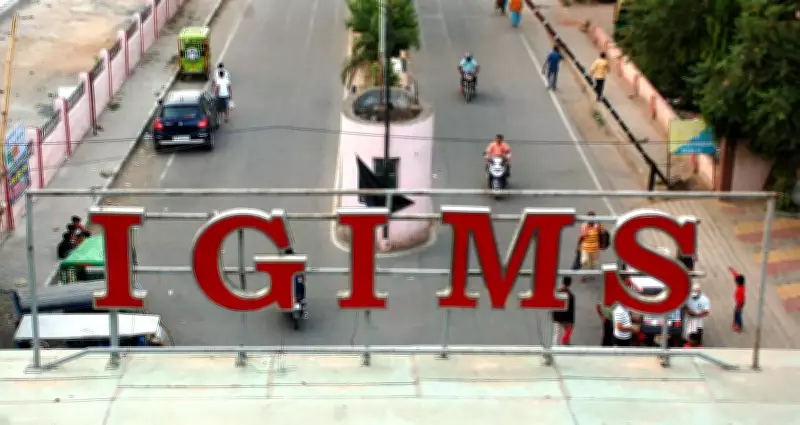
A photojournalist from the Times of India was reportedly detained and forced to delete photographs by security personnel at the Indira Gandhi Institute of Medical Sciences (IGIMS) in Patna on a recent afternoon. The incident occurred while the journalist was documenting fire safety measures at the hospital, following a tragic fire at a Muzaffarpur hospital that claimed five lives.
Routine Assignment Turns Into Ordeal
At around 2:30 pm, the photojournalist entered IGIMS with the simple assignment of capturing images of fire hydrants and patient areas. It was routine journalistic work, with no controversy or hidden agenda. However, shortly after beginning to take photographs, two security guards stopped him.
Before he could explain his purpose, he was dragged to the security control room. Once inside, the door was shut behind him, and what started as a routine assignment began to feel like an interrogation.

Intimidation and Threats
Inside the room, approximately 10 to 12 security personnel surrounded the journalist, behaving in an intimidating manner. Their first question was not about his identity or organization, but about the photographs he had taken. They threatened him with dire consequences for clicking pictures without permission.
The journalist explained he was taking general photographs, but his explanation was dismissed. One guard argued that a person cannot photograph someone's house without permission—a comparison the journalist found baffling, as he was documenting fire safety infrastructure in a major public institution, not a private residence.
Demand to Delete Photographs
The pressure soon shifted to the camera. The guards demanded that the journalist delete the photographs. When he refused, the threats intensified. A senior security official arrived, and one guard named Narendra was particularly crude; at one point, the journalist feared physical attack. The guard warned that he could be taken to the police.
In an attempt to resolve the situation, the journalist called the hospital's medical superintendent, Dr. Manish Mandal. His first three calls went unanswered. When Dr. Mandal finally picked up the fourth call, he asked the journalist to meet Dr. Bibhuti Prassan Sinha, the hospital's spokesperson. Before the journalist could explain further, Dr. Mandal said he was in a meeting and disconnected the call.
Forced Compliance
After the call, the pressure resumed immediately. The guards spoke menacingly and again insisted on the deletion of the photographs. Fearing physical harm, the journalist eventually complied. They examined his camera to ensure the images were removed and only then allowed him to leave. Before letting him go, they warned him not to venture there in the future.
Aftermath and Response
After leaving the hospital, a senior colleague posted a message about the incident in a hospital WhatsApp group. This time, Dr. Manish Mandal responded, stating, “Not in my purview. Manish Kumar is security in command now and Dr. Bibhuti Prassan Sinha is now spokesperson of the hospital. I have no say in this matter now.”
The photojournalist expressed dismay, noting that for years, photographers have routinely covered public institutions without facing such treatment. Yet on a day when he was documenting fire safety measures after a tragic hospital fire, he found himself confined, threatened, and compelled to delete photographs.
Broader Implications
The episode raises troubling questions about transparency and press freedom. If a journalist cannot freely document matters of public interest inside a public hospital, what does that say about the state of transparency? More importantly, it highlights the challenges faced by the media in performing its watchdog role.