

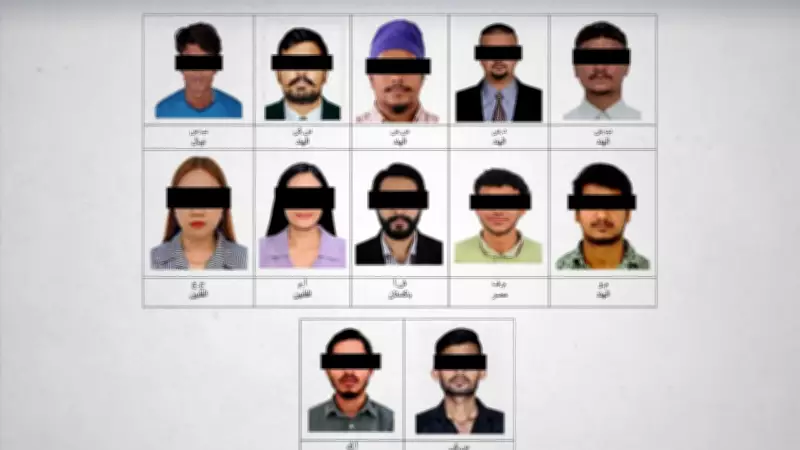
UAE Cracks Down on AI-Generated War Propaganda, Arrests 35 Including 19 Indians
The United Arab Emirates, facing persistent military strikes from Iran, has taken decisive legal action against the spread of fabricated digital content. On Sunday, authorities ordered the arrest of 35 individuals from multiple nationalities, with 19 of those being Indian citizens. The arrests target people accused of publishing misleading and artificially generated video clips on social media platforms, exploiting the heightened regional tensions stemming from the ongoing Israel-US-Iran conflict.
Expedited Trials and Serious Charges
According to an official report from the UAE's state news agency WAM, all accused individuals have been referred for an expedited trial process. This legal move occurs as Iranian strikes continue to pose a direct threat to major UAE population centers including Dubai, Sharjah, and the capital Abu Dhabi, keeping these cities within potential target ranges.
The charges stem from three distinct categories of alleged offenses:

- Publication of authentic military footage with inflammatory additions
- Creation and circulation of completely fabricated AI-generated content
- Promotion of hostile state propaganda and military glorification
Attorney-General Hamad Saif Al Shamsi stated that these actions followed intensive digital platform monitoring aimed at curbing the spread of fabricated information and artificial content designed to incite public disorder and undermine national stability.
Three Distinct Groups with Different Modus Operandi
Investigations revealed the defendants operated in three separate groups with varying methods of misinformation dissemination.
The first group comprised 10 individuals who allegedly published and circulated authentic video clips showing missile passage and interception in UAE airspace, along with footage of resulting impacts. This group included five Indians, one Pakistani, one Nepali, two Filipinos, and one Egyptian. Authorities claim they added commentary and sound effects suggesting active aggression, potentially inciting public anxiety and panic while risking exposure of the country's defensive capabilities.
The second group consisted of seven individuals who shared fabricated visual content generated using artificial intelligence technology. This group included five Indians along with one Nepali and one Bangladeshi national. They allegedly recirculated footage from incidents outside the UAE while falsely claiming they occurred within the country, creating synthetic scenes of explosions and missile strikes enhanced with national flags or specific dates to lend false credibility.
The third group comprised six accused individuals who allegedly published content glorifying a hostile state and its political and military leadership, portraying regional military aggression as achievements. Five of these six accused are Indian nationals, with one Pakistani citizen also involved. Their posts reportedly praised leaders of that state and amplified propaganda narratives harmful to UAE national interests.
Additional Charges and Legal Consequences
In addition to these three main groups, two other individuals, both Indian nationals, are facing similar charges. The public prosecution had already begun interrogating 10 defendants on Saturday and ordered their remand in custody prior to Sunday's expanded arrests.
Attorney-General Shamsi emphasized that such acts constitute serious offenses punishable by imprisonment of at least one year and a minimum fine of AED 100,000. He explained that current events have been exploited to disseminate misinformation intended to deliberately mislead the public while undermining national security, order, and stability.
"Some of the accused circulated AI-generated footage falsely suggesting explosions, attacks on prominent landmarks, or massive fires with smoke rising across various parts of the UAE," Shamsi stated. "The incidents also involved exploiting children's emotions in videos falsely implying security threats. Other clips claimed the destruction of military facilities within the country or attributed foreign incidents to locations in the UAE, with the aim of misleading public opinion and spreading anxiety."

The crackdown represents one of the most significant legal responses to AI-generated misinformation in the Middle East, occurring against the backdrop of genuine security threats from Iranian military actions. Authorities have made clear their determination to prosecute those who weaponize digital technology to create panic during times of regional tension.





