US-Israel Military Forces Assert Control Over Iranian Airspace Amid Escalating Conflict
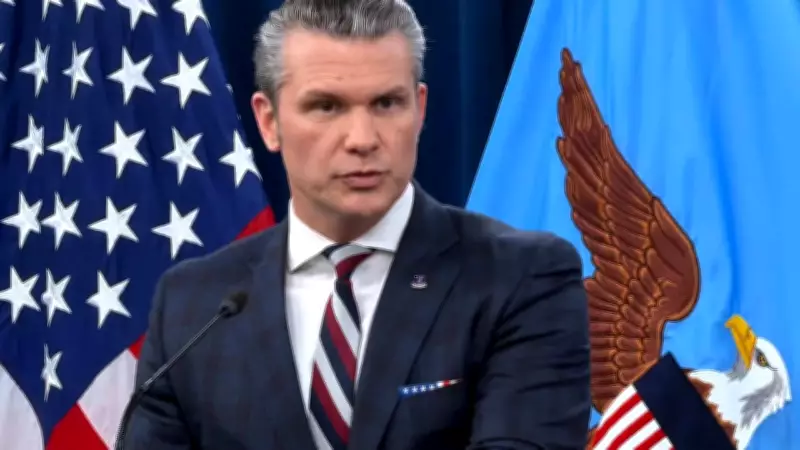
In a significant development in the ongoing West Asia crisis, US Defense Secretary Pete Hegseth declared on Wednesday that American and Israeli military forces are rapidly advancing to establish complete dominance over Iranian airspace. Speaking from the Pentagon, Hegseth emphasized that while this strategic move aims to secure aerial superiority, some incoming drones and missiles might still penetrate defensive systems.
Complete Aerial Control Within Days
"Starting last night, and to be completed in a few days... the two most powerful air forces in the world [US, Israel] will have complete control of Iranian skies," Hegseth stated during his press briefing. He clarified, however, that this dominance does not guarantee absolute interception of all threats, noting, "This does not mean we can stop everything." The defense secretary assured that maximum force protection measures had been implemented prior to the commencement of offensive operations.
Extended Conflict Timeline and Regional Deployments
Hegseth projected that the military engagement could extend longer than initially anticipated, potentially lasting up to eight weeks. "You can say four weeks, but it could be six, it could be eight, it could be three," he remarked, declining to commit to a fixed timeline. He emphasized that the United States would dictate the "pace and tempo" of operations, with additional US forces, including fighter jets and bombers, continuously deploying to the region as part of an extensive military buildup.

Casualties and Security Risks
His comments coincided with warnings from US officials about possible further American casualties in a conflict expected to persist for weeks. The situation remains precarious, as evidenced by a recent tragic incident where six American soldiers lost their lives on Sunday. An Iranian drone strike targeted an operations center at a civilian port facility in Kuwait, located several miles from a major US base. A family member of one of the victims described the site as a temporary container-style structure lacking dedicated defensive protection.
Iranian Threats and Historical Context
Hegseth also addressed prior intelligence concerning alleged Iranian threats against former President Donald Trump, revealing that individuals associated with these plots were eventually incorporated into targeting considerations. "We've known for a long time that Iran had intentions on trying to kill President Trump... I ensured that those who were responsible for that were eventually part of the target list," he disclosed, while clarifying that this issue was not central to the current military campaign.
Broader Regional Implications
The conflict's ramifications extend beyond immediate military engagements, with Tehran threatening to target military and economic infrastructure across the Middle East, indicating a potential widening of the confrontation. In related developments, the crisis has impacted international maritime activities, with reports indicating that 38 Indian ships are currently stranded in the Persian Gulf, resulting in three sailor fatalities. Additionally, the US has ordered non-emergency staff to evacuate its consulates in Karachi and Lahore, Pakistan, citing safety risks.
As the situation evolves, defense leaders, including Gen Dan Caine, chairman of the Joint Chiefs of Staff, have cautioned that US personnel in the region remain exposed to significant risk, underscoring the volatile and unpredictable nature of this escalating conflict.