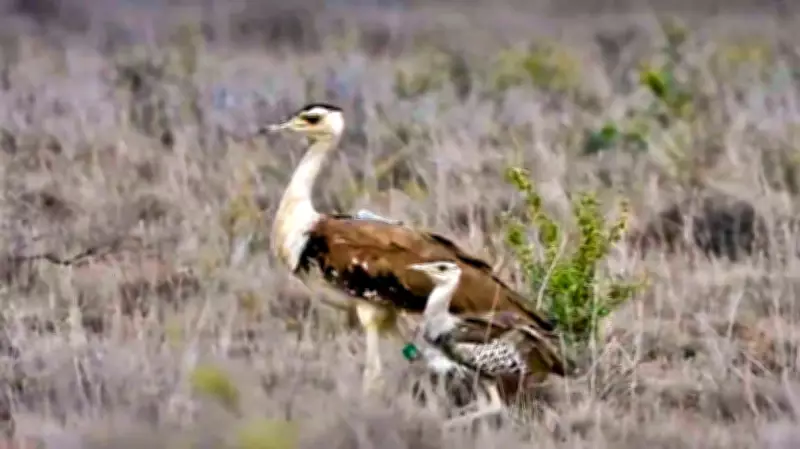
A second Great Indian Bustard chick has successfully passed the critical 40-day survival period after being born on May 21 at Naliya in Gujarat, Union Environment Minister Bhupender Yadav announced in a social media post. The chick was reared using the innovative 'jump start' method, which involves collecting eggs from the wild, incubating them in controlled conditions, and releasing the chicks back into their natural habitat once they are strong enough.
Breakthrough in Conservation Efforts
This marks a significant milestone in the conservation of the critically endangered Great Indian Bustard, whose population has dwindled to fewer than 150 individuals in the wild. The 'jump start' technique, developed by wildlife scientists, aims to boost survival rates by protecting eggs from predators and environmental threats during the most vulnerable early stages. According to the minister, the chick's survival beyond 40 days is a testament to the effectiveness of this method.
How the 'Jump Start' Method Works
The process begins with locating and collecting eggs from natural nests in the desert grasslands of Gujarat and Rajasthan. These eggs are then transported to a specialized incubation facility in Naliya, where they are kept under optimal temperature and humidity conditions. After hatching, the chicks are raised in a predator-proof enclosure, receiving veterinary care and a diet mimicking their natural food sources. Once they reach a certain age and weight, they are gradually acclimatized to the wild before release.

Critical Phase Overcome
The first 40 days are considered the most perilous for Great Indian Bustard chicks, as they are highly susceptible to predation, disease, and environmental stress. The fact that this second chick has crossed this threshold provides hope for the species' recovery. In 2024, the first chick raised through this method also survived the critical period, demonstrating the reproducibility of the technique.
Broader Impact and Future Plans
Bhupender Yadav emphasized that the success is part of a larger conservation program involving state governments, the Wildlife Institute of India, and international partners. Plans are underway to scale up the 'jump start' method to increase the population of Great Indian Bustards in the wild. The minister also called for continued habitat protection and community involvement to ensure the long-term survival of the species.