

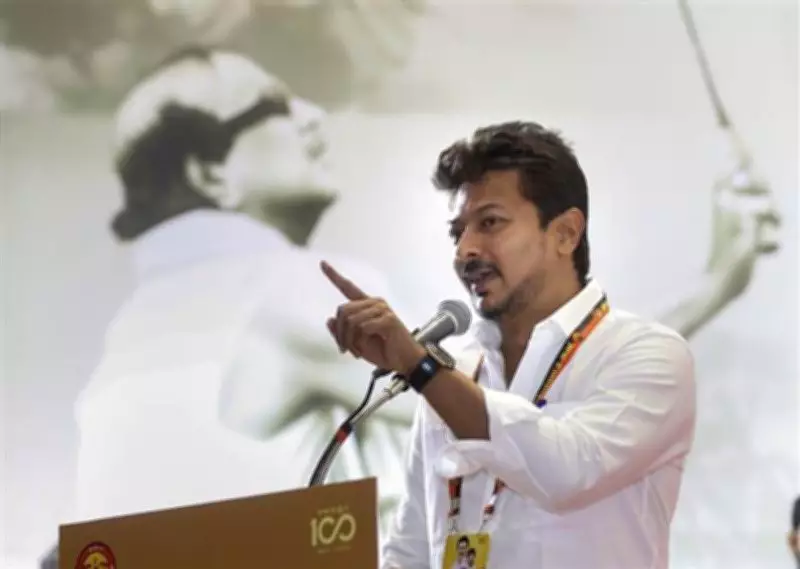
Udhayanidhi Stalin, the Leader of Opposition in Tamil Nadu, has ignited a major political controversy by calling for the abolition of Sanatana Dharma. Speaking at a public event, Stalin asserted that the concept of Sanatana Dharma is against social justice and must be eradicated. His remarks have drawn sharp reactions from various political leaders and religious groups.
Stalin's Statement and Context
Addressing a gathering, Stalin claimed that Sanatana Dharma promotes caste discrimination and inequality. He argued that it is a regressive ideology that hinders the progress of marginalized communities. "Sanatana Dharma must be abolished. It is not just a religion but a social evil that has oppressed people for centuries," he said. The DMK leader emphasized that his party stands for rationalism and social reform.
Political Reactions
The statement has triggered a political storm. BJP leaders condemned Stalin's remarks, accusing him of hurting Hindu sentiments. Union Minister Kiren Rijiju said, "Such statements are irresponsible and divisive. Sanatana Dharma is the eternal truth and foundation of Indian culture." Tamil Nadu BJP chief K. Annamalai demanded an apology from Stalin, calling his words "hate speech."

On the other hand, some secular parties have supported Stalin's right to critique religious orthodoxy. CPI(M) leader Prakash Karat said, "Criticism of regressive practices is essential for social progress. However, the language should be cautious."
Sanatana Dharma: An Overview
Sanatana Dharma, often referred to as Hinduism, is one of the world's oldest religions. It encompasses a wide range of beliefs, rituals, and philosophies. The term "Sanatana Dharma" translates to "eternal duty" or "eternal order." While it has been criticized for caste hierarchy, many reformers have worked to address these issues within the faith.
Impact on Tamil Nadu Politics
The controversy is likely to impact the political landscape in Tamil Nadu. The DMK, led by M.K. Stalin, has a history of rationalist and anti-caste rhetoric. Udhayanidhi Stalin, the son of the Chief Minister, is seen as a rising leader. His remarks may consolidate the DMK's base among rationalists but could alienate religious voters. The opposition AIADMK and BJP are expected to use this issue to mobilize support.
Legal and Social Implications
Several activists have filed police complaints against Stalin for hurting religious sentiments. Section 295A of the Indian Penal Code prohibits deliberate acts intended to outrage religious feelings. Legal experts are divided on whether the statement constitutes a crime. Social media has been abuzz with debates, with hashtags like #AbolishSanatanaDharma trending.
Conclusion
The call to abolish Sanatana Dharma has reopened debates on religion, caste, and secularism in India. While Stalin's supporters view it as a necessary step towards social justice, opponents see it as an attack on faith. The coming days are likely to see intensified political rhetoric as parties position themselves ahead of elections.






