

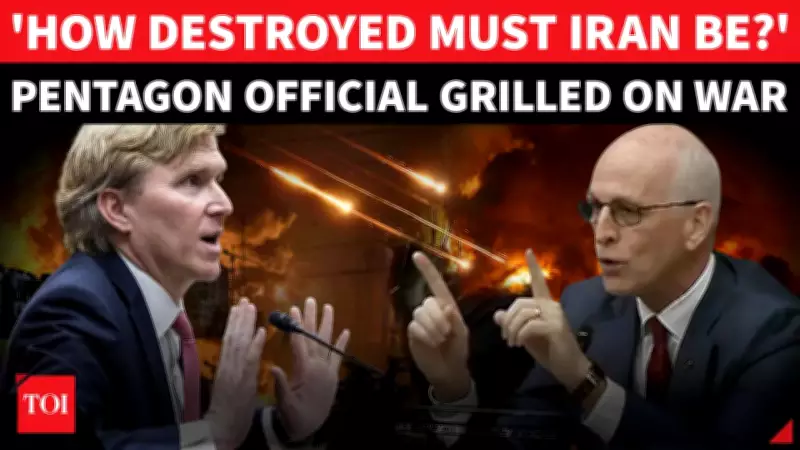
Adam Smith Confronts Pentagon Official Over Iran War Strategy in Heated Hearing
A fiery exchange erupted on Capitol Hill as Representative Adam Smith (D) confronted Pentagon policy chief Elbridge Colby during a House Armed Services Committee hearing. The debate centered on the Trump administration's ongoing military actions in Iran, with Smith pressing for clarity on the war's objectives and criticizing what he termed a failure to uphold campaign promises.
Defining Success in the Iran Conflict
Smith grilled Colby on a fundamental issue: What constitutes "success" in this war? Colby outlined the administration's goals, emphasizing the dismantling of Iran's missile capabilities, the destruction of its naval power, and preventing Tehran from acquiring nuclear weapons. However, Smith pushed back, arguing that these objectives lack specificity and fail to address the broader implications of prolonged conflict.
Smith asserted, "The strikes in Iran directly contradict Donald Trump's campaign pledge to avoid entangling the U.S. in another Middle East war. This administration has not only escalated tensions but also failed to articulate a coherent exit strategy or measurable outcomes."

Rebuilding and Resilience in Iran
Smith further challenged the effectiveness of the military approach, stating, "Iran will simply rebuild its capabilities. History shows that targeted strikes often lead to temporary setbacks rather than lasting change. Without a diplomatic or economic component, we risk a cycle of destruction and reconstruction that drains American resources and destabilizes the region."
He highlighted concerns over civilian casualties and the potential for broader regional escalation, noting recent reports of Iranian drone strikes in Dubai and missile attacks in Israel. These incidents underscore the volatile nature of the conflict and the need for a reassessment of strategy, Smith added.
Broader Context and Implications
The hearing also touched on related developments, such as Iran's espionage busts and Trump's controversial remarks mocking Iranian sailors. Smith criticized these actions as counterproductive, arguing they undermine diplomatic efforts and fuel anti-American sentiment. He called for a shift towards de-escalation and multilateral engagement, emphasizing that military force alone cannot achieve long-term stability.
In conclusion, Smith's interrogation revealed deep divisions over U.S. policy in Iran, with calls for greater transparency and a reevaluation of tactics. As the war continues, questions about its sustainability and ultimate goals remain unresolved, posing challenges for future administrations and global security dynamics.






