

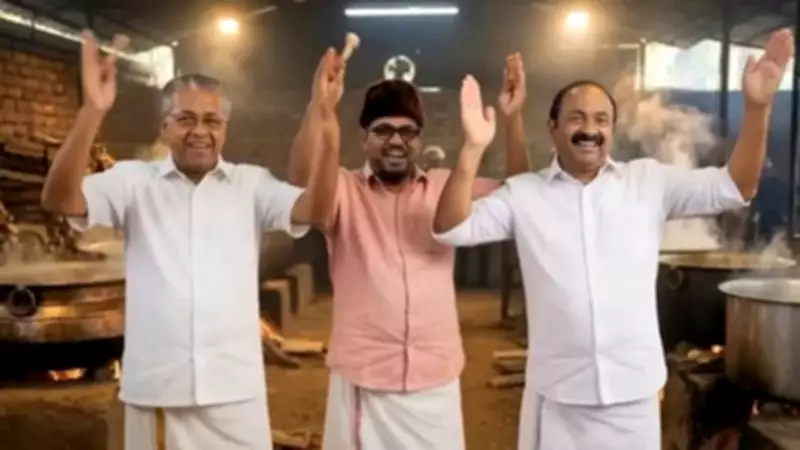
Artificial Intelligence Reshapes Kerala's Political Battlefield
In a significant technological shift, artificial intelligence (AI) has entered the political arena of Kerala, fundamentally transforming how election campaigns are conducted across party lines. Political strategists and candidates are now deploying advanced AI-powered video tools to craft highly personalized content, analyze voter sentiment in real-time, and optimize their outreach strategies with unprecedented precision.
The Rise of AI-Driven Campaign Tools
Across Kerala, political parties are increasingly adopting sophisticated AI platforms that can generate customized video messages for individual voters. These tools analyze vast datasets, including demographic information, social media activity, and past voting patterns, to create content that resonates with specific voter segments. For instance, a candidate might use AI to produce thousands of unique video variations, each tailored to address local issues, cultural nuances, or personal concerns of voters in different constituencies.
This technological integration marks a departure from traditional mass-media campaigns, enabling hyper-targeted communication that was previously impossible at scale. Campaign managers report that AI tools help them identify undecided voters, predict electoral trends, and allocate resources more efficiently by focusing on high-impact areas and demographics.

Cross-Party Adoption and Strategic Implications
Interestingly, the adoption of AI video technology is not limited to any single political faction in Kerala. Major parties, including the ruling Left Democratic Front (LDF), the opposition United Democratic Front (UDF), and the Bharatiya Janata Party (BJP), are all experimenting with these tools to gain a competitive edge. This widespread usage indicates a broader trend toward digital-first campaigning in Indian politics, where data-driven insights and personalized content are becoming central to electoral success.
The strategic implications are profound, as AI allows campaigns to:
- Conduct sentiment analysis on social media to gauge public opinion and adjust messaging accordingly.
- Automate the creation of multilingual video content to reach diverse linguistic groups within Kerala.
- Simulate potential campaign scenarios and voter responses to refine strategies before implementation.
Challenges and Ethical Considerations
Despite its advantages, the integration of AI in political campaigns raises several ethical and practical challenges. Concerns about data privacy, misinformation, and the potential for AI-generated deepfakes to manipulate voters are increasingly prominent. Political observers note that while AI can enhance engagement, it also necessitates robust regulatory frameworks to prevent abuse and ensure transparency in electoral processes.
Moreover, there is a growing debate about the digital divide in Kerala, as AI-driven campaigns might disproportionately benefit urban, tech-savvy voters over rural populations with limited internet access. Campaign teams are thus balancing high-tech tools with traditional grassroots efforts to maintain inclusivity.
Future Outlook for AI in Indian Elections
As Kerala serves as a testing ground, the success of AI video tools in its political campaigns could set a precedent for other Indian states and national elections. Experts predict that AI will become an integral component of electioneering, driving innovations in voter analytics, content personalization, and real-time strategy adjustments. However, this evolution will likely require updated electoral laws and ethical guidelines to address the unique risks posed by advanced technologies in democratic processes.
In conclusion, the entry of AI into Kerala's political battlefield is reshaping campaigns across party lines, offering new opportunities for voter engagement while posing significant challenges that demand careful navigation. As technology continues to evolve, its impact on democracy and governance in India will be closely watched by policymakers and citizens alike.






