

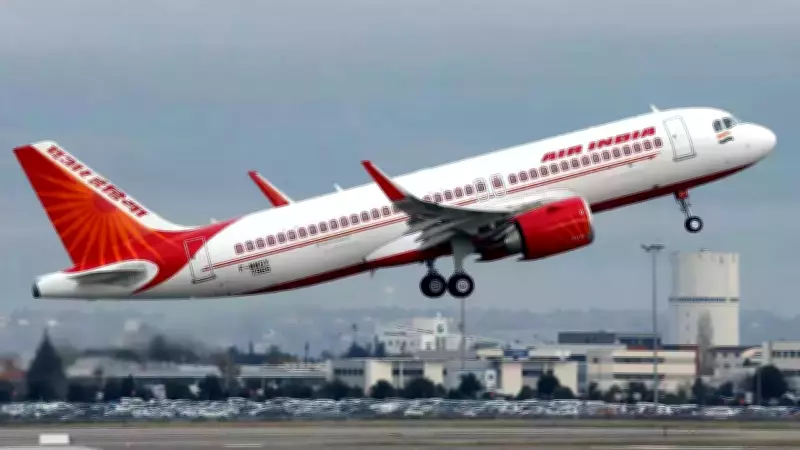
Air India Dreamliner Diverted to Jeddah Following Multiple System Warnings
MUMBAI: An Air India Boeing 787-8 Dreamliner, operating flight AI-133 from Bengaluru to London, was forced to divert to Jeddah on Monday after its crew faced a series of unexplained warnings across various aircraft systems, according to sources. The incident highlights ongoing concerns about aviation safety and system reliability in modern aircraft.
Precautionary Diversion and Safe Landing
The aircraft, registered as VT-ANI and aged 13 years, had been airborne for over six hours when pilots made the decision to divert as a precautionary measure. It landed safely at Jeddah around 8 pm IST. In a statement, Air India confirmed the diversion was due to a "suspected technical issue" and noted that the aircraft is currently undergoing comprehensive technical inspections in line with established safety protocols.
This is not the first time VT-ANI has faced scrutiny. Three months ago, the Directorate General of Civil Aviation (DGCA) issued a show-cause notice to Air India for operating the aircraft despite repetitive faults, raising questions about maintenance practices.

Detailed System Faults and Warnings
Sources revealed that the defects flagged during the flight included:
- Auto-throttle disconnect: This forced pilots to manage speed manually, increasing workload.
- Fuel jettison system fault: This prevented the aircraft from jettisoning fuel to reduce landing weight, complicating the landing process.
- Overweight landing advisory: A warning indicating the aircraft was too heavy for a standard landing.
- Abnormal fuel pressure on the right engine: Potentially affecting engine performance and safety.
- Aft outflow valve problem: A fault in the rear cabin pressurisation valve, crucial for maintaining air pressure inside the passenger cabin.
These warnings appeared across seemingly unrelated areas such as engines, fuel, flight controls, and pressurisation. According to sources, this pattern suggests an issue with the aircraft's common core system (CCS), described as the Boeing 787's "central nervous system." The CCS is the main computer network that shares data between almost every major system on the aircraft, including flight controls, engines, hydraulics, fuel, electrical power, and cabin pressure.
Expert Analysis on Common Core System Issues
Captain C S Randhawa, president of the Federation of Indian Pilots, emphasized that the multiple system faults point to a serious issue deep within the Boeing 787's common core system. He explained that the faults could be related to components like the fiber optic translator, which converts light signals into electrical signals, or the sensor data concentrator, which collects information from sensors across the aircraft.
When these components become unstable, different systems begin receiving inconsistent or conflicting data, triggering a cascade of unrelated warnings. "Diversion was the only correct response to an aircraft that was no longer presenting a single, reliable state," Capt Randhawa stated. He further linked this incident to broader safety concerns, referencing the June 12, 2025 B787 Ahmedabad accident and questioning whether the system design itself permits such cascading ambiguity under certain conditions.
Implications for Aviation Safety
This incident underscores the critical importance of robust system design and maintenance in modern aviation. With the CCS acting as a backbone for aircraft operations, any instability can lead to multiple, seemingly unrelated failures, posing significant risks. Air India's response, including the ongoing inspections, will be closely watched by regulators and industry experts to ensure future safety.
As aviation technology advances, ensuring the reliability of integrated systems like the CCS becomes paramount to prevent similar incidents and maintain passenger trust.






