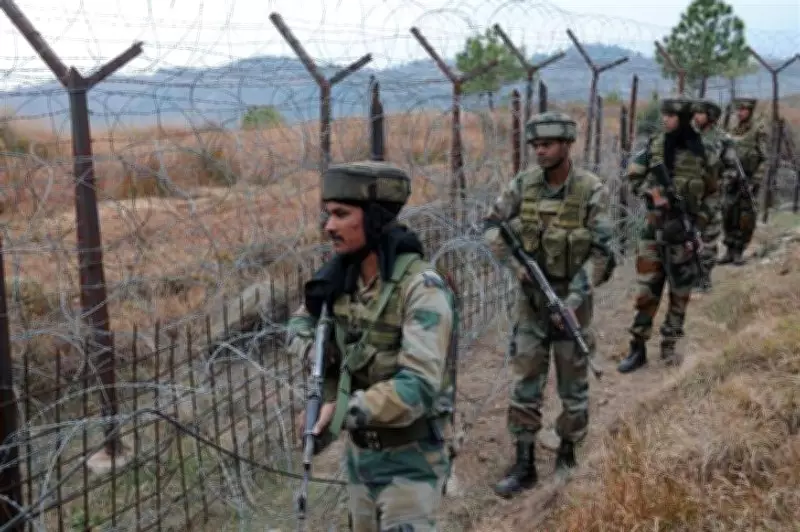
The Indian Army formally began raising five Integrated Battle Groups (IBGs) along the front with China on Wednesday, July 1, 2026, marking a significant step to boost combat readiness. The IBGs are tasked with responding and striking at targets within 24 hours of receiving orders, according to sources.
Concept and Command Structure
The IBG concept upgrades the “Cold Start Doctrine,” a military strategy developed after Operation Parakram following the 2001 Parliament attack. Each IBG will be headed by a Major General-rank officer, and five such officers have already been posted to take charge, signaling the formal raising of the new outfits. With the government sanction letter for the Mountain Strike Corps’ IBGs finalized on July 1, the raising, postings, and administrative processes can now commence.
Deployment and Composition
The IBGs will be stationed in two northeastern states—Sikkim and Arunachal Pradesh—that share a boundary with China. A Fire Support Group, equipped with long-range artillery guns and other firepower, will serve as backup for the IBGs. Each IBG will have a strength of around 5,000 personnel, making it larger than a brigade (3,000–3,500 troops) but smaller than a division (10,000–12,000 troops). An IBG integrates combat formations to make forces faster, more flexible, and self-sufficient, combining infantry, armor, artillery, engineers, signals, air defense, and logistics support under one commander.

Timeline and Scope
The raising is likely to be completed by mid-2027. The Mountain Strike Corps has two divisions—one tasked to Ladakh and the other to the North-East. Sources confirmed that the IBGs are currently being raised only in the North-East. Former Army Chief Gen Upendra Dwivedi stated in January that the government had approved the long-pending proposal for setting up IBGs, with the first to be established in the Mountain Strike Corps.
Strategic Implications
The creation of the IBGs is part of a series of steps to restructure the Army, making it leaner and more agile. An IBG along the Himalayas requires different equipment, training, and attack tactics compared to forces operating in the plains. The IBGs will not require new raising or inductions; instead, they will integrate existing elements of infantry, tank regiments, artillery, UAVs, engineers, and signals. A 2022 study on “Re-organisation and rightsizing of the Indian Army” reviewed operational structures to make them efficient and future-ready, considering the operational situation on western and northern borders. The IBGs are a direct outcome of this review.