

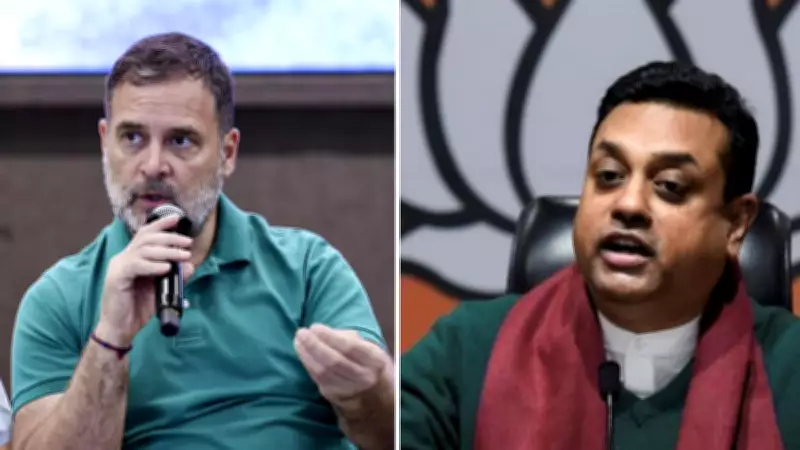
The Bharatiya Janata Party (BJP) on Wednesday launched a sharp attack on Congress leader Rahul Gandhi, accusing him of trying to create anarchy in the country to topple the government led by Prime Minister Narendra Modi. The ruling party's response came after Gandhi's recent remarks and activities, which the BJP claims are aimed at destabilizing the nation.
BJP's Allegations
Addressing a press conference, BJP spokesperson Sambit Patra stated that Rahul Gandhi's statements are part of a deliberate strategy to spread chaos and undermine the democratic process. Patra alleged that Gandhi's actions, including his comments on the Agnipath scheme and other government policies, are designed to incite unrest and weaken the Modi administration.
Patra further claimed that the Congress party has a history of such behavior, citing instances from the past where opposition parties allegedly tried to destabilize elected governments. He urged the public to see through what he called the "divisive agenda" of the Congress and its allies.

Rahul Gandhi's Response
In response, Rahul Gandhi dismissed the BJP's accusations as baseless and an attempt to divert attention from real issues. He reiterated his criticism of the government's handling of the economy, unemployment, and social harmony. Gandhi emphasized that his party's focus remains on holding the government accountable for its failures.
The Congress leader also challenged the BJP to debate on key national issues rather than resorting to personal attacks. He accused the ruling party of using state institutions to silence dissent and suppress opposition voices.
Political Reactions
The political slugfest has intensified ahead of the upcoming state elections and the 2024 general elections. Several opposition parties have come out in support of Rahul Gandhi, criticizing the BJP for what they describe as a smear campaign. Meanwhile, BJP leaders have maintained that their allegations are backed by evidence of Congress's attempts to create unrest.
Political analysts suggest that this exchange reflects the growing polarization in Indian politics, with both sides unwilling to find common ground on critical issues. The ongoing war of words is expected to continue as the election season approaches.






