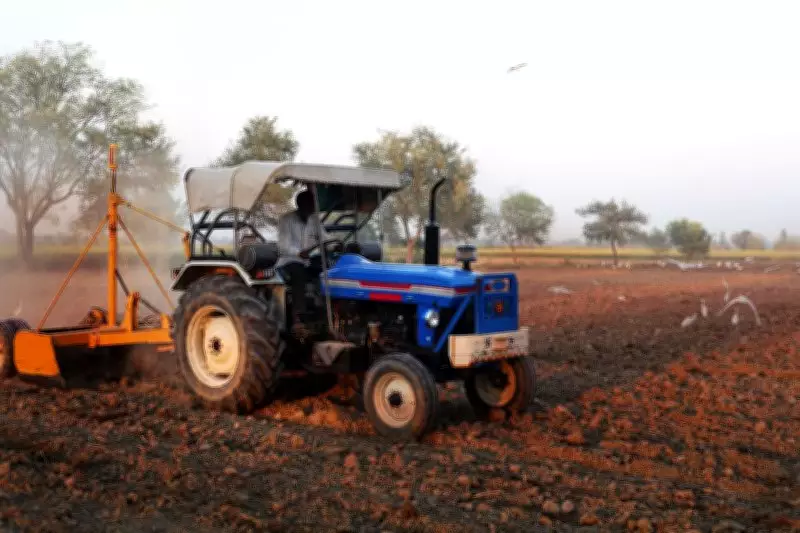
Stricter Stage-V Norms for Agricultural and Construction Machinery
The Ministry of Road Transport and Highways has officially notified stricter emission standards for agricultural tractors, power tillers, combine harvesters, and construction equipment vehicles (CEVs) under the Central Motor Vehicles (Eleventh Amendment) Rules, 2026. The new regulations, issued under Section 110 of the Motor Vehicles Act, 1988, will be implemented in phases starting October 1, 2026, with additional milestones in April 2028 and April 2032.
New Emission Limits and Key Changes
The amendment upgrades emission norms to Tractor Emission Norms (TREM) Stage-V for agricultural machinery and CEV Stage-V for construction equipment. These standards significantly lower permissible limits for Carbon Monoxide (CO), Hydrocarbons (HC), Nitrogen Oxides (NOx), and Particulate Matter (PM). For the first time, Particle Number (PN) limits have been introduced for specified engine categories to control ultra-fine particulate emissions.
Under the new standards, engines in the 56 kW to 130 kW category must limit emissions to 5.0 g/kWh of CO, 0.19 g/kWh of HC, 0.4 g/kWh of NOx, and only 0.015 g/kWh of PM—a reduction of about 40% in the PM limit compared to the previous Stage-IV standard.

Phased Implementation Timeline
For agricultural tractors and combine harvesters, TREM Stage-V standards become mandatory for engines in the 56 kW to 560 kW range from October 1, 2026. Engines between 8 kW and 19 kW will also shift to Stage-V from the same date. Engines in the 19 kW to 37 kW category will move to TREM Stage-IIIAA from April 1, 2028, and to TREM Stage-V from April 1, 2032. Engines in the 37 kW to 56 kW category will adopt Stage-V from April 1, 2032.
Construction equipment vehicles with engines above 56 kW must comply with CEV Stage-V from October 1, 2026, while smaller engine categories are already covered under Stage-V requirements.
Real-Time Emission Monitoring and Stronger Compliance
The amendments introduce in-service emission monitoring, requiring certain categories of tractors and construction equipment to meet emission standards throughout their operational life, not just during type approval. Vehicles with engines below 19 kW and above 56 kW manufactured after October 1, 2026, as well as those in the 19 kW to 56 kW category manufactured after April 1, 2028, will be subject to operational emission monitoring.
The Conformity of Production (CoP) regime has been strengthened: manufacturers producing more than 200 engines per engine family annually must undergo annual compliance testing, while smaller manufacturers will be tested once every two years. Sample sizes for testing will be based on one day's average production, subject to prescribed limits.
Fuel Types and Technical Specifications
The new framework covers a broad range of fuels, including CNG, Bio-CNG, Biogas, LNG, LPG, Hydrogen-Enriched CNG (HCNG), diesel, ethanol blends, flex-fuel, biodiesel blends, hydrogen, and dual-fuel engines. The notification also formally prescribes technical specifications for HCNG, providing regulatory clarity for hydrogen-enriched compressed natural gas in off-road machinery.
Impact on Agriculture and Infrastructure Sectors
The notification is expected to significantly impact India's agricultural and infrastructure sectors. Tractor manufacturers and construction equipment companies will need to upgrade engine technologies to meet the new standards. Buyers of new tractors and heavy machinery after the implementation dates can expect equipment fitted with advanced emission-control systems designed to reduce harmful exhaust emissions and improve fuel efficiency.
The government has provided a nine-month registration window for vehicles manufactured before the applicable emission deadlines, allowing manufacturers and dealers to clear existing inventories during the transition period.
Industry experts believe the new norms will help improve air quality, reduce emissions from diesel-powered off-road machinery, and bring India's regulatory framework closer to globally accepted emission standards while encouraging cleaner technologies in the farm and construction equipment sectors.