

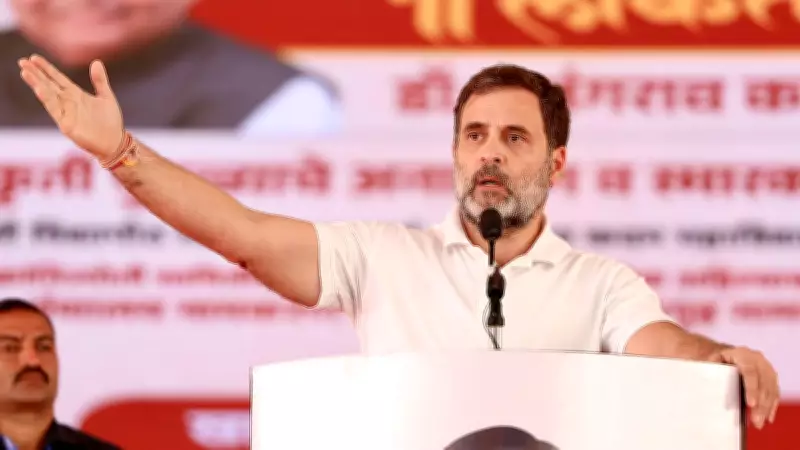
Congress Leader Rahul Gandhi Accuses Sangh Parivar of Deliberate Societal Poisoning
In a sharp political statement, Congress leader Rahul Gandhi has leveled serious allegations against the Sangh Parivar, accusing the organization of intentionally poisoning Indian society to keep the nation divided. This accusation comes at a crucial time, as political tensions escalate in the lead-up to upcoming elections, highlighting deep-seated ideological rifts within the country's political landscape.
Allegations of Deliberate Division
Rahul Gandhi asserted that the Sangh Parivar, a collective term for organizations affiliated with the Rashtriya Swayamsevak Sangh (RSS), is engaging in tactics designed to sow discord and fragmentation among Indian citizens. He claimed that these actions are not incidental but are part of a calculated strategy to undermine social harmony and unity. According to Gandhi, this deliberate poisoning of societal relations aims to perpetuate divisions based on religion, caste, and other identity markers, thereby weakening the fabric of the nation.
Political Context and Reactions
The Congress party has backed Gandhi's statements, emphasizing that such divisive practices threaten India's democratic and secular ethos. This accusation is seen as a direct challenge to the ruling Bharatiya Janata Party (BJP), which is closely associated with the Sangh Parivar. Political analysts suggest that this move is intended to rally opposition forces and galvanize public opinion against what the Congress perceives as harmful ideological influences.

In response, representatives from the Sangh Parivar and BJP have dismissed the allegations as baseless and politically motivated. They argue that the Congress is resorting to fear-mongering and misinformation to distract from its own governance failures and lack of a coherent political agenda. This exchange underscores the intense polarization that characterizes contemporary Indian politics, with both sides trading barbs over issues of national identity and social cohesion.
Implications for Indian Society
Gandhi's remarks have sparked a broader debate about the state of societal harmony in India. Critics of the Sangh Parivar point to instances of communal violence and discriminatory policies as evidence of a divisive agenda, while supporters defend the organization's role in promoting cultural nationalism and national pride. The controversy raises important questions about:
- The role of political organizations in shaping social discourse.
- The impact of ideological conflicts on everyday life and community relations.
- The need for constructive dialogue to bridge divides and foster inclusivity.
As the political rhetoric intensifies, citizens are left to navigate a complex environment where accusations and counter-accusations often overshadow substantive policy discussions. The Congress's stance, as articulated by Rahul Gandhi, calls for vigilance against forces that seek to exploit differences for political gain, urging a collective effort to preserve India's pluralistic heritage.
Looking Ahead
With elections on the horizon, such allegations are likely to feature prominently in campaign narratives, influencing voter perceptions and party strategies. The Congress aims to position itself as a defender of unity and diversity, contrasting its vision with what it portrays as the divisive politics of the Sangh Parivar. Whether this approach will resonate with the electorate remains to be seen, but it undoubtedly adds fuel to an already heated political climate.
In conclusion, Rahul Gandhi's accusation against the Sangh Parivar highlights ongoing tensions in Indian politics, emphasizing the challenges of maintaining social harmony in a diverse democracy. As debates continue, the focus may shift towards finding common ground and addressing the root causes of division, rather than merely trading political blows.






