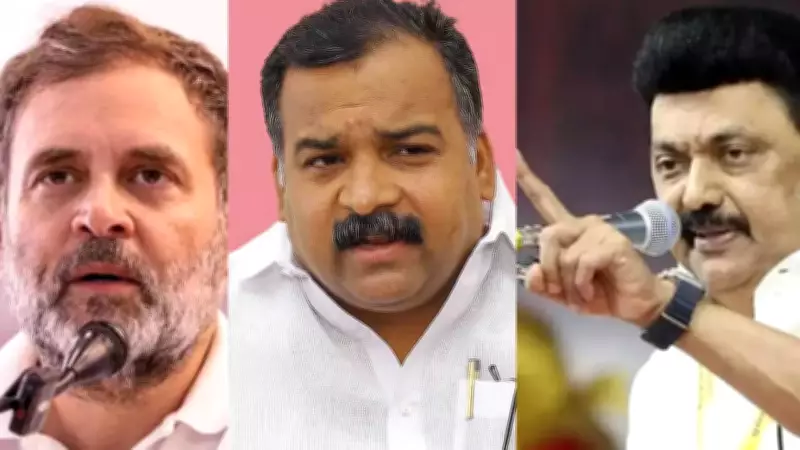
Congress-DMK Alliance Faces Critical Test in Puducherry Elections
The Union Territory of Puducherry, geographically and culturally intertwined with Tamil Nadu, is preparing for crucial assembly elections in April. However, a deepening rift between the Congress party and its ally, the Dravida Munnetra Kazhagam (DMK), threatens to disrupt the political landscape just months before voters head to the polls.
The Core Conflict: Power Sharing and Political Respect
At the heart of the growing tension is the Congress party's dual demand for a share of power in Tamil Nadu if the DMK-led alliance secures victory, alongside a significantly larger number of electoral seats to contest compared to the 2021 arrangement. Puducherry has emerged as an unexpected battleground for this simmering conflict, with Congress leaders pushing for greater recognition from their dominant alliance partner.
Manickam Tagore, a Lok Sabha MP from Tamil Nadu and close confidant of former Congress president Rahul Gandhi, has become the public face of this push for enhanced "respect" within the alliance. His demands have now extended beyond Tamil Nadu to include Puducherry, creating additional pressure points within the opposition coalition.

Congress's Historical Dominance in Puducherry Politics
The political dynamics of Puducherry, a former French colony, have long been dominated by the Congress party. While other political formations including the DMK, AIADMK, and All India NR Congress have formed governments in the territory, none have matched the Congress's historical supremacy.
This dominance is reflected in significant numbers:
- Seven of Puducherry's ten chief ministers have hailed from the Congress party
- The territory's lone Lok Sabha constituency has been won by Congress or its factions in eleven of fifteen general elections since 1967
- This enduring legacy explains why Congress views Puducherry as politically significant territory worth defending
Tagore's "26% vs 8%" Challenge to DMK Leadership
The first clear indication of alliance tensions spilling into Puducherry emerged on February 6, when Tagore posted on social media citing electoral data to argue that Congress should lead the alliance in the Union Territory. He specifically referenced the 2014 general election results, where Congress secured 26.35% of votes compared to DMK's 8.19% in the Puducherry Lok Sabha constituency.
"Will the party with 8% of the votes lead the coalition? No, the party with 26% of the votes will lead. Why should the Congress party be talked down to in the coalition?" Tagore questioned publicly.
The immediate trigger for this confrontation appears to have been a visit to Puducherry by DMK's election in-charge S Jagathrakshakan, who notably did not meet with Congress leaders during his trip. This perceived snub, combined with ongoing friction in Tamil Nadu, prompted Tagore's public challenge to DMK's leadership claims in Puducherry.
Current Electoral Reality Versus Historical Dominance
Despite Tagore's assertive stance and Congress's historical dominance, current electoral realities present a more complex picture. While Congress remains a significant force, its performance in the 2021 assembly elections revealed vulnerabilities:
- Congress secured only two of the fourteen seats it contested in 2021
- This represented a dramatic decline from fifteen seats won out of twenty-one in 2016
- Meanwhile, DMK won six of thirteen contested seats in 2021, securing the opposition leader position
- DMK's performance improved significantly from just two seats won in 2016
This shifting balance of power raises questions about whether Tagore's demands represent genuine electoral strategy or election-season posturing designed to pressure the DMK in both Puducherry and Tamil Nadu.
The Leverage Dilemma: Congress's Limited Options
The Congress party faces significant challenges in asserting its demands, particularly given its limited leverage in Tamil Nadu where DMK maintains firm control. The Dravidian party has categorically refused to share power in Tamil Nadu, with Chief Minister M.K. Stalin personally reiterating this position.
This creates a complex dynamic where:

- Congress last headed a Tamil Nadu government in 1967
- The party last held the opposition leader position in Tamil Nadu in 1996
- Congress's historical influence in Puducherry represents one of its few remaining areas of potential leverage
- The Tamil Nadu Congress unit has even urged national president Mallikarjun Kharge to take action against Tagore for straining alliance relations
Strategic Imperatives: Why Congress Cannot Afford Further Friction
With much at stake, the Congress party faces difficult strategic calculations. Currently governing only three states—Himachal Pradesh, Karnataka, and Telangana—the party can ill afford fresh tensions within a key alliance. A victory in Puducherry would provide Congress with:
- A crucial additional governing foothold
- Enhanced standing within the INDIA opposition bloc it leads
- Momentum following recent electoral setbacks after the 2024 Lok Sabha elections
The opposition coalition has experienced simmering tensions since reducing the BJP below the majority mark for the first time since 2014, making alliance management increasingly critical.
For now, Congress appears to be adopting a cautious wait-and-watch approach. Whether this strategy strengthens its negotiating position or further strains a vital political partnership will become clear as election preparations intensify in the coming weeks. The outcome in Puducherry could significantly influence not just the immediate electoral battle with the ruling NDA coalition, but also the longer-term balance of power within the opposition alliance.