

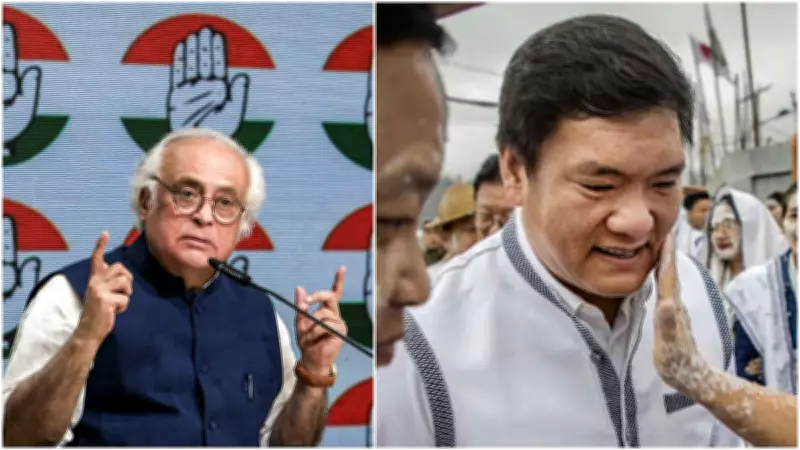
The Congress party has strongly criticized Arunachal Pradesh Chief Minister Pema Khandu for allegedly retaining control over official files despite a Central Bureau of Investigation (CBI) probe into a corruption case. Senior Congress leader Jairam Ramesh termed this as an 'insult to the Supreme Court' and a 'gross travesty' of the apex court's order.
Congress Leader's Remarks
Jairam Ramesh, a prominent Congress spokesperson, stated that Khandu's continued access to files undermines the Supreme Court's directive. The court had earlier ordered a CBI investigation into allegations of corruption involving the state government. Ramesh emphasized that allowing the chief minister to retain control over documents during an active probe violates the spirit of judicial independence and due process.
Background of the Controversy
The controversy erupted after reports emerged that Khandu was still exercising authority over administrative files, despite the CBI probe. The Supreme Court had intervened in the matter following a petition filed by the Congress party, alleging misuse of power and financial irregularities. The court's order mandated a fair and transparent investigation, free from executive interference.

Political Reactions
The Congress party has demanded immediate action, urging the Supreme Court to take note of the alleged violation. Party leaders have also called for Khandu's suspension pending the investigation. Meanwhile, the Bharatiya Janata Party (BJP) has defended the chief minister, stating that he is cooperating with the probe and that the allegations are politically motivated.
Implications for Governance
Legal experts have weighed in, noting that if the allegations are proven, it could set a dangerous precedent for governance and judicial accountability. The case highlights the ongoing tensions between state governments and the judiciary in matters of corruption probes.
What's Next?
The Supreme Court is expected to hear the Congress party's plea regarding the alleged violation of its order. The outcome could have significant implications for the Arunachal Pradesh government and the broader relationship between executive powers and judicial oversight in India.






