Congress Takes Aim at Modi Government Over Netanyahu's Announcement of PM's Israel Visit
The Congress party launched a sharp critique against the Central government on Monday, following Israeli Prime Minister Benjamin Netanyahu's public revelation of Prime Minister Narendra Modi's scheduled trip to Israel. The opposition party asserted that India is increasingly learning about its own government's diplomatic decisions through announcements made by foreign leaders, rather than through official domestic channels.
Netanyahu's Announcement Sparks Political Controversy
Prime Minister Narendra Modi is set to embark on a two-day visit to Israel from February 25 to 26, according to sources cited by news agency PTI. The itinerary was first disclosed by Netanyahu during his address to the Conference of Presidents of Major American Jewish Organizations on Sunday. This revelation prompted immediate reaction from Congress leadership.
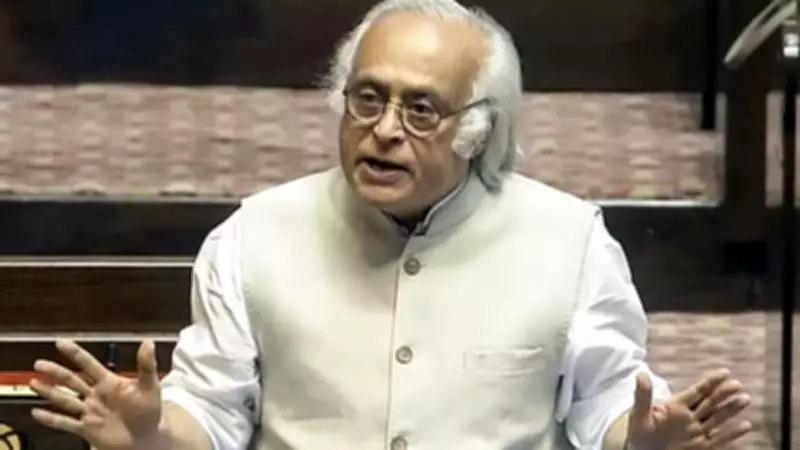
Congress General Secretary (Communications) Jairam Ramesh took to social media platform X to express his party's concerns. "India hears of the halt to Operation Sindoor first from the US Secretary of State. India hears of the India-US trade deal first from the US President," Ramesh wrote, referencing previous instances where international announcements preceded official Indian government communications.

"Just now India has heard of Prime Minister Modi's dates for his visit to Israel first from Mr. Netanyahu - who has reduced Gaza to rubble and dust and is now dispossessing and displacing more Palestinians in the occupied West Bank," Ramesh added in his post, linking the announcement timing to broader geopolitical concerns about Israel's actions in Gaza.
Pattern of External Announcements Alleged
The Congress party's remarks also referenced the recently concluded interim India-US trade agreement, which was initially announced by US President Donald Trump on his Truth Social platform earlier this month. The opposition has alleged a consistent pattern where crucial diplomatic and trade decisions are being communicated internationally before being formally shared with the Indian public or Parliament.
During his address, Netanyahu highlighted the strengthening relationship between the two nations, stating: "Parliament address on the anvil. Who's coming here next week? Narendra Modi." The Israeli leader described the India-Israel relationship as a "tremendous alliance" that continues to grow in significance.
Details of the Upcoming Diplomatic Visit
A source in Jerusalem confirmed to PTI that PM Modi's visit is "likely to be short from February 25 to 26" but emphasized that "its impact is deep given the popularity PM Modi enjoys not only in Israel but around the world." While the specific program for the visit is still being finalized, expectations include PM Modi addressing the Israeli Knesset during his stay and engaging in discussions about bilateral and regional issues.
This will mark Prime Minister Modi's second official visit to Israel, following his historic trip in July 2017, which was the first-ever visit by an Indian Prime Minister to the Jewish state. Netanyahu praised India as "enormously powerful" and "enormously popular" during his remarks, indicating that both sides plan to discuss expanding cooperation across multiple sectors.
India's Position on Israel-Palestine Relations
India has maintained a consistent foreign policy position supporting a "two-state solution" to the Israel-Gaza conflict, while simultaneously nurturing a strategic partnership with Israel. Last year, PM Modi and Netanyahu held a telephonic conversation where they reaffirmed their commitment to strengthening bilateral ties.
During that conversation, PM Modi stated: "Spoke with my friend Prime Minister Netanyahu. We reviewed progress in the India-Israel Strategic Partnership and agreed to further strengthen our cooperation. Also reaffirmed our shared commitment to zero tolerance for terrorism. India supports all efforts aimed at achieving a just and durable peace in the region."

Netanyahu's own planned visit to India has been on hold since 2023 following the October 7 Hamas attacks, which disrupted previously scheduled diplomatic engagements between the two nations. The upcoming visit represents an important step in maintaining momentum in the bilateral relationship despite regional challenges.