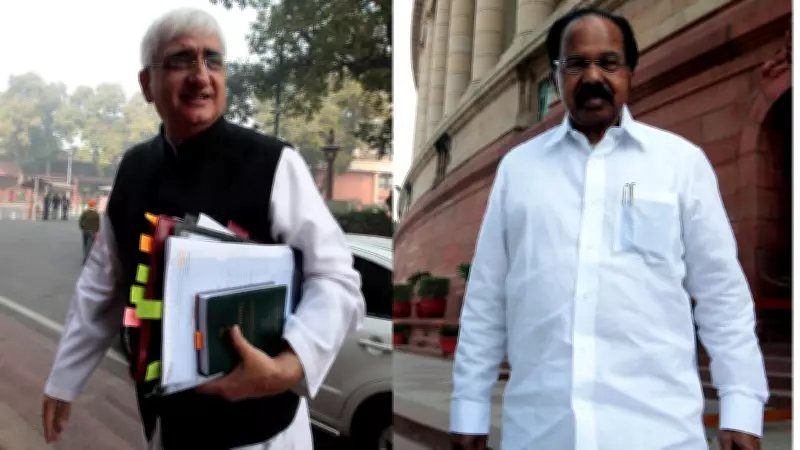
In a sharp political confrontation, the Congress party has vehemently criticized the recent Economic Survey's recommendation to re-examine the Right to Information (RTI) Act, 2005. The party alleges that the government is planning to undermine this landmark legislation, which was enacted during the United Progressive Alliance (UPA) era. However, this stance stands in stark contrast to the past positions of senior UPA ministers, who had themselves expressed concerns about the misuse of the RTI Act over a decade ago.
Congress Accuses Government of Weakening RTI
The Economic Survey, released ahead of the Union Budget, acknowledged the RTI Act as a powerful tool for democratic reform and accountability. Yet, it cautioned that the law risks becoming an end in itself, with disclosures sometimes celebrated without contributing to better governance. In response, Congress president Mallikarjun Kharge launched a scathing attack on the government, accusing it of systematically weakening the RTI Act since 2014. He highlighted issues such as pending cases, control over Information Commissioners, and the impact of the Digital Personal Data Protection Act on public interest disclosures.
Historical Context: UPA Ministers' Concerns in 2011
Interestingly, during the UPA-2 government (2009-2014), senior ministers like Salman Khurshid and Veerappa Moily had publicly raised alarms about the misuse of the RTI Act. In 2011, amid controversies over RTI disclosures related to the 2G spectrum allocation, Khurshid, then Law Minister, argued that the Act was affecting institutional efficacy and efficiency. He emphasized the need for a balance between transparency and the confidentiality required for effective governance, citing examples of confidential communications between ministers and the Prime Minister.

Similarly, Moily, then Corporate Affairs Minister, expressed concerns that RTI disclosures were transgressing into government functioning. He stressed that while the Congress remained committed to transparency, the Act should not scuttle the independence of individuals and ministers. Both ministers called for a review to safeguard sensitive information without diluting the core principles of the RTI Act.
Current Debate and Political Implications
The current debate underscores a long-standing tension in Indian politics regarding the RTI Act. On one hand, it has been instrumental in uncovering corruption scandals, such as those that emerged during the UPA years. On the other hand, there are persistent worries about its potential misuse and impact on bureaucratic efficiency. Kharge's objections focus on what he perceives as an attempt to shield public service records and introduce a ministerial veto, which could undermine transparency.
Moily, in recent comments, reiterated that the RTI Act should be strengthened rather than scrapped. He advocated for governance processes to protect secrecy without compromising citizen empowerment. This nuanced position highlights the complexity of the issue, where both transparency and operational efficiency must be balanced.
Conclusion: A Continuing Struggle for Accountability
The controversy surrounding the Economic Survey's call for re-examining the RTI Act reveals deep-seated political divisions. While the Congress now defends the Act vigorously, its own ministers had previously voiced similar concerns about misuse. This historical perspective adds layers to the ongoing discourse on governance, accountability, and the role of transparency in a democracy. As the debate unfolds, it remains crucial to find a middle ground that upholds the RTI Act's original intent while addressing legitimate operational challenges.