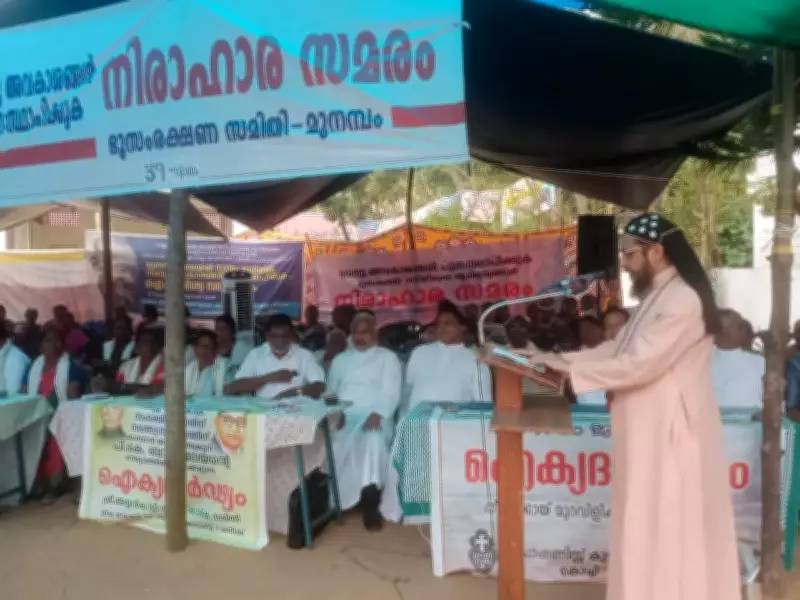
A church-run Malayalam daily, Deepika, launched a scathing attack on the Wakf Board in its editorial on Monday over its decision to register the disputed land in Munambam as wakf property on the Umeed portal. The editorial asserted that with this move, the Board was not only challenging 610 families or Christians but also secular Kerala itself.
Wakf Act Under Fire
The editorial emphasized the importance of remembering the destruction caused in this secular country by sections of the Wakf Act that allow the Board to take possession of any property it deems as its own. It noted that the Wakf Board's role in fostering extreme Hindutva in the country will be recorded in history.
Government Amendment Insufficient
The editorial pointed out that the central government amended the law to prevent such encroachments in the future. However, the amendment did nothing to save the residents of Munambam, who were caught under this religious law before the changes were made. This allowed the Board to continue its actions in Munambam. While the Pinarayi government made some efforts, they failed to resolve the issue. The editorial drew attention to V D Satheesan, who, when he was the opposition leader, stated that the problem could be resolved in 10 minutes if they came to power. These developments are now being brought to his notice.

Religious Appeasement Questioned
The editorial posed several questions: How many people, including those in Munambam, have been rendered homeless by a law created by Congress for religious appeasement? How many courts have been left powerless? How much religious division has it caused?
Wakf Board's Claims Contradicted
The Wakf Board registered the property on Umeed, declaring itself as the custodian, even though Farook College, the true custodian, stated that the land in Munambam is not wakf property. The editorial added that since the Wakf Board included 404 acres of land belonging to 610 families at Munambam Velankanni beach on Kochi Vypeen Island in its asset details in 2019, the lives of the people of Munambam have been at the mercy of this religious law. It called for researchers to investigate how such provisions, which are impossible in any modern secular-democratic constitutional country, were passed in India.